See llms.txt for all machine-readable content.

Google Calendar and Verifalia integration

Save yourself the work of writing custom integrations for Google Calendar and Verifalia and use n8n instead. Build adaptable and scalable Productivity, workflows that work with your technology stack. All within a building experience you will love.

How to connect Google Calendar and Verifalia

Create a new workflow and add the first step

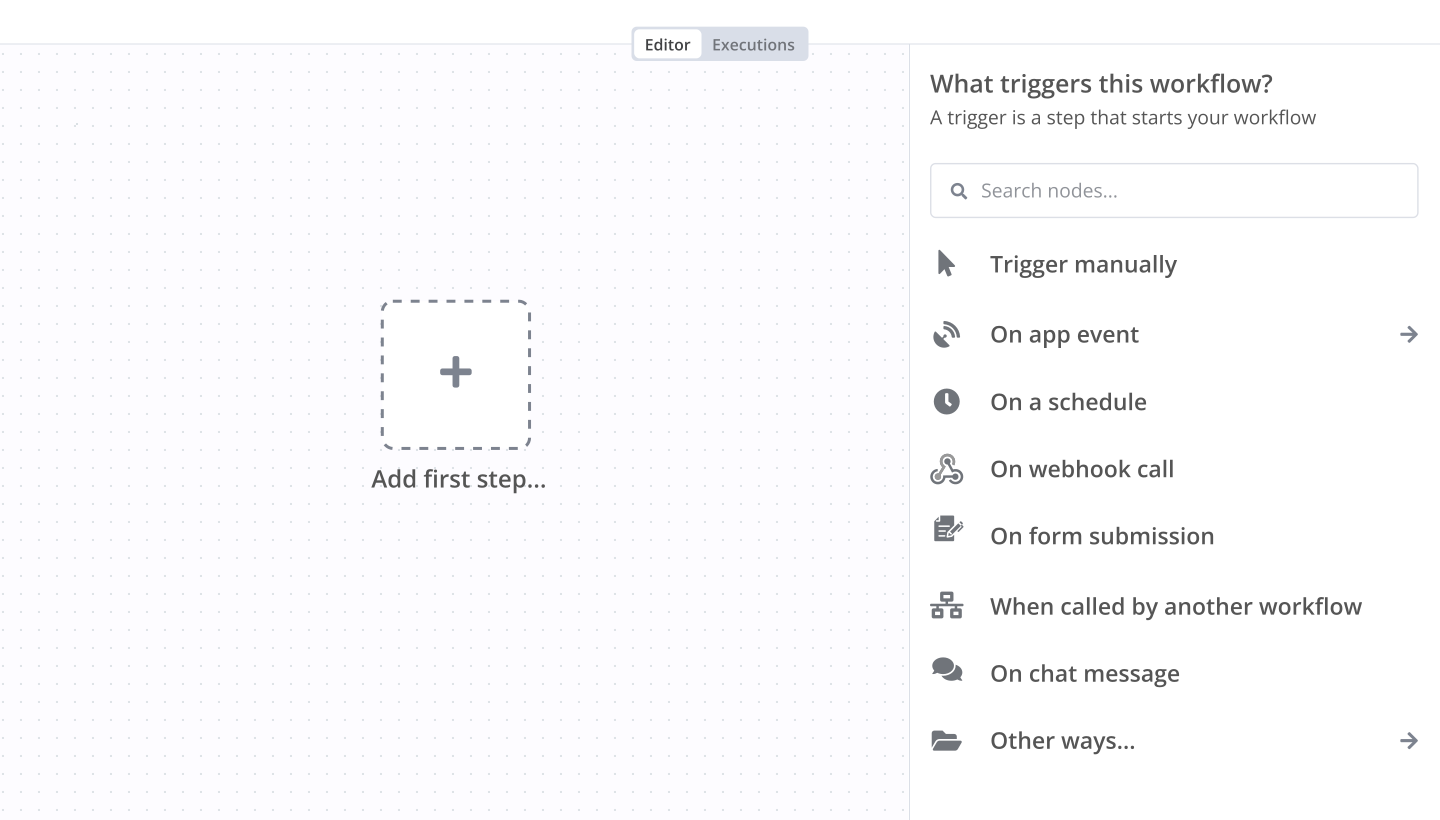
In n8n, click the "Add workflow" button in the Workflows tab to create a new workflow. Add the starting point – a trigger on when your workflow should run: an app event, a schedule, a webhook call, another workflow, an AI chat, or a manual trigger. Sometimes, the HTTP Request node might already serve as your starting point.

Google Calendar and Verifalia integration: Create a new workflow and add the first step

Automate lead qualification & follow-up with Gemini, HubSpot, Zoom & Mailchimp

Lead Qualification & Follow‑up (Gemini) Automate lead intake, AI qualification, and next‑step outreach. Qualified leads get a scheduled meeting, Zoom details, an email confirmation, CRM update, and Mailchimp enrollment. Not‑qualified leads receive a follow‑up sequence, CRM update, and a 30‑day reminder. What this workflow does AI qualifies leads as QUALIFIED or NOT QUALIFIED using Google Gemini. Supports two triggers: Webhook (wordpress-form) or n8n Form Trigger. QUALIFIED branch: AI phone call via VAPI Schedules Google Calendar event Creates Zoom meeting Sends confirmation email via Gmail Adds to Mailchimp audience Updates contact in HubSpot NOT QUALIFIED branch: AI phone call via VAPI Adds to Mailchimp audience Sends follow‑up email via Gmail Updates contact in HubSpot Creates 30‑day follow‑up calendar event Apps and credentials required Google Gemini (PaLM/Gemini API) Gmail HubSpot Zoom Google Calendar VAPI (for AI phone calls) Mailchimp Environment variables MAILCHIMP_LIST_ID_QUALIFIED=your_mailchimp_list_id_for_qualified MAILCHIMP_LIST_ID_FOLLOWUP=your_mailchimp_list_id_for_followup Triggers supported Webhook: path wordpress-form (POST) Form Trigger: built‑in n8n form Use only one in production. Keep the other disabled. Expected input (fields) name: string email: string message: string If using Webhook, send a JSON body with the fields above. Setup Connect credentials: Google Gemini (model: models/gemini-2.5-flash) Gmail HubSpot (OAuth) Zoom Google Calendar (select the target calendar) VAPI (HTTP header auth: Bearer token) Set env vars: MAILCHIMP_LIST_ID_QUALIFIED MAILCHIMP_LIST_ID_FOLLOWUP Choose your trigger: Webhook: enable and use the provided URL for wordpress-form Form Trigger: enable and publish the form Review timing: adjust Wait nodes for your timezone and SLA. Personalize messaging: edit Gmail subjects/bodies and Zoom topic. CRM and lists: confirm HubSpot properties and Mailchimp list IDs. How it works (at a glance) Intake → AI classifies (QUALIFIED / NOT QUALIFIED) QUALIFIED: VAPI call → Schedule Calendar → Create Zoom → Add to Mailchimp (qualified) → Gmail confirmation → HubSpot update NOT QUALIFIED: VAPI call → Add to Mailchimp (follow‑up) → Gmail follow‑up → HubSpot update → 30‑day calendar event Test the workflow (before going live) Submit a test via your chosen trigger with name, email, message. Confirm AI decision at the “Lead Decision” node. If QUALIFIED: VAPI call executed Calendar event created Zoom meeting created (join URL available) Mailchimp enrollment (qualified list) Gmail confirmation sent HubSpot contact created/updated If NOT QUALIFIED: VAPI call executed Mailchimp enrollment (follow‑up list) Gmail follow‑up sent HubSpot updated 30‑day calendar reminder created Open any failing HTTP nodes and review response codes/messages. Go‑live checklist All credentials connected (no warnings) MAILCHIMP_LIST_ID_QUALIFIED and MAILCHIMP_LIST_ID_FOLLOWUP set Timezone and delays validated Email copy approved Only one trigger enabled Final end‑to‑end test passed Toggle workflow Active Customization ideas Add a Slack or Microsoft Teams notification on QUALIFIED Enrich leads (Clearbit, ZoomInfo, etc.) before AI decision Swap Mailchimp for your ESP (Klaviyo, SendGrid Marketing) Add a second‑chance branch for ambiguous AI classifications Localize email copy by country or language Troubleshooting Webhook receives no data: ensure external form POSTs JSON to the n8n URL and network rules allow it. AI decision empty/garbled: verify Gemini credentials/model ID and input fields. Mailchimp errors: verify List IDs and that email is valid. Gmail send fails: check OAuth scopes and daily limits. Zoom/Calendar issues: re‑connect OAuth; verify calendar access. HubSpot errors: confirm OAuth scopes and property mappings. Security and scopes Gmail: send email Google Calendar: create events Zoom: create meetings HubSpot: read/write contacts Mailchimp: list membership VAPI: authenticated HTTP requests Gemini: model inference Use least‑privilege for each integration. Limits and notes Gmail and Mailchimp rate limits may apply during spikes. Zoom and Google Calendar API quotas apply for frequent scheduling. VAPI call timeouts are 30s by default; adjust as needed. Changelog 2025‑09‑15: Initial public template with dual triggers, Gemini qualification, VAPI calls, scheduling, Mailchimp, Gmail, and HubSpot updates.

Build your own Google Calendar and Verifalia integration

Create custom Google Calendar and Verifalia workflows by choosing triggers and actions. Nodes come with global operations and settings, as well as app-specific parameters that can be configured. You can also use the HTTP Request node to query data from any app or service with a REST API.

Google Calendar supported actions

Supported methods for Verifalia

Delete
Get
Head
Options
Patch
Post
Put

To set up Verifalia integration, add the HTTP Request node to your workflow canvas and authenticate it using a generic authentication method. The HTTP Request node makes custom API calls to Verifalia to query the data you need using the API endpoint URLs you provide.

See the example here

Requires additional credentials set up

Use n8n's HTTP Request node with a predefined or generic credential type to make custom API calls.

Google Calendar and Verifalia integration details

Google Calendar

Google Calendar

Google Calendar is a time-management and calendar service created by Google Workspace. It helps you schedule and organize events and meetings, send notifications, and synchronize with your team. It is widely used by both individuals and organizations.

Verifalia

Verifalia

Verifalia is an online email validation service that verifies the deliverability of email addresses. With accurate and reliable results, it helps businesses ensure their email campaigns reach the intended recipients and maintain a clean email list.

Other integrations with Google Calendar and Verifalia

FAQ about Google Calendar integrations

Need help setting up your Google Calendar and Verifalia integration?

Discover our latest community's recommendations and join the discussions about Google Calendar and Verifalia integration.

  • jake chard

    Google Calendar free/busy times output is confusing the AI sometimes

    jake chard

    Hi all! I’m currently using this workflow to suggest 2 available times in a google calendar. Currently I am just using the straight output from calendar node in the AI response, it gives the AI busy times. (Here are t…
    Open topic

Looking to integrate Slack and VirusTotal in your company?

Trusted by teams building smarter workflows.

Why

Why use n8n to integrate Google Calendar with Verifalia

Handle branching, merging and iteration easily. Pause your workflow to wait for external events.

Re-run single steps to test changes in no time. And pin your data to avoid generating trigger events every time you execute.

Your data is displayed alongside your settings, making edge cases easy to track down.

Use 1000+ workflow templates available from our core team and our community.

Copy and paste, easily import and export workflows.
Simple enough to 
understand + sophisticated 
enough to ship