

See llms.txt for all machine-readable content.

Microsoft Teams and Snapdocs integration

Save yourself the work of writing custom integrations for Microsoft Teams and Snapdocs and use n8n instead. Build adaptable and scalable Communication, HITL, workflows that work with your technology stack. All within a building experience you will love.

How to connect Microsoft Teams and Snapdocs

Create a new workflow and add the first step

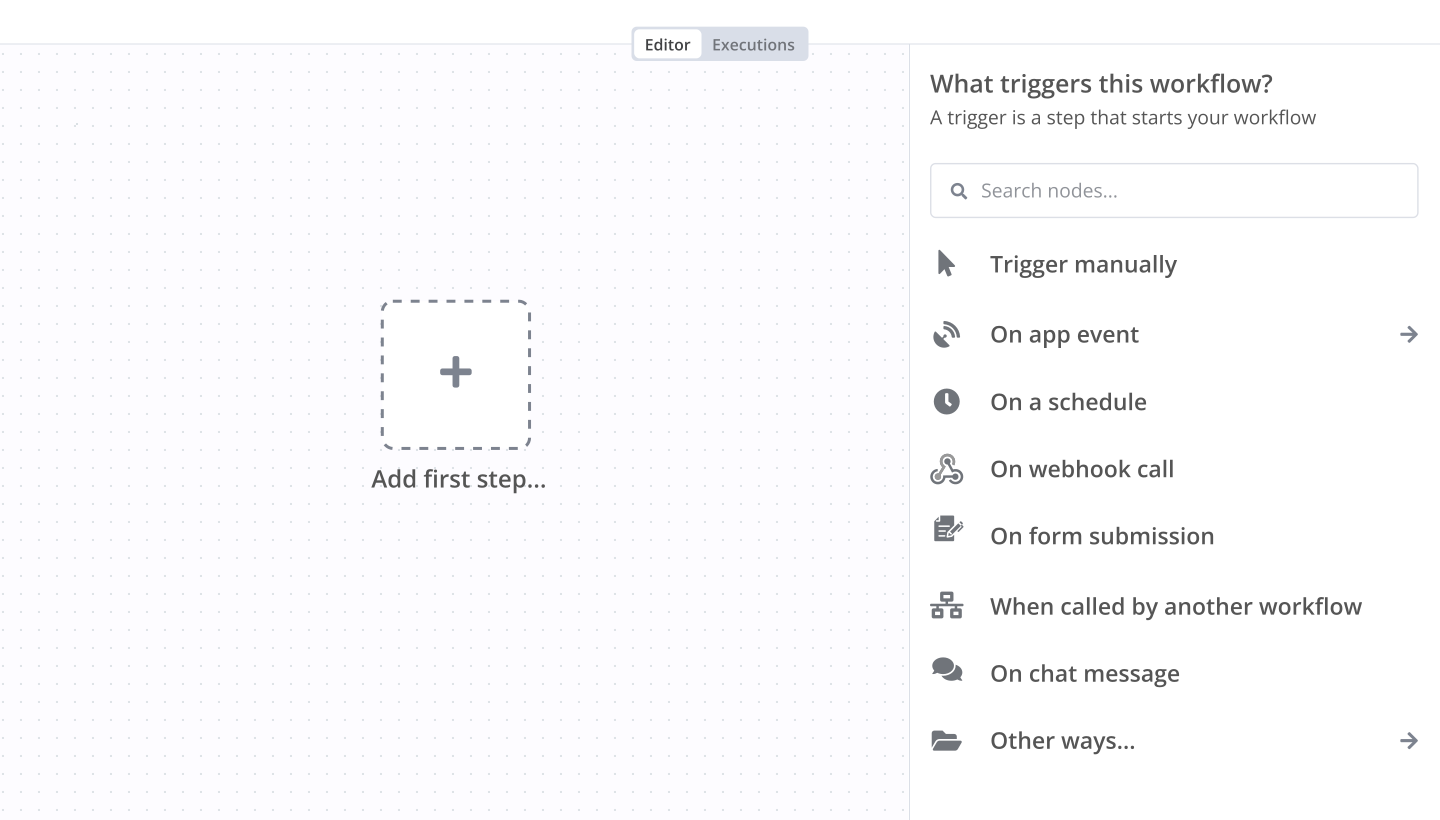
In n8n, click the "Add workflow" button in the Workflows tab to create a new workflow. Add the starting point – a trigger on when your workflow should run: an app event, a schedule, a webhook call, another workflow, an AI chat, or a manual trigger. Sometimes, the HTTP Request node might already serve as your starting point.

Microsoft Teams and Snapdocs integration: Create a new workflow and add the first step

Track & alert public transport delays using ScrapeGraphAI, Teams and Todoist

Public Transport Delay Tracker with Microsoft Teams and Todoist ⚠️ COMMUNITY TEMPLATE DISCLAIMER: This is a community-contributed template that uses ScrapeGraphAI (a community node). Please ensure you have the ScrapeGraphAI community node installed in your n8n instance before using this template. This workflow continuously monitors public-transportation websites and apps for real-time schedule changes and delays, then posts an alert to a Microsoft Teams channel and creates a follow-up task in Todoist. It is ideal for commuters or travel coordinators who need instant, actionable updates about transit disruptions. Pre-conditions/Requirements Prerequisites An n8n instance (self-hosted or n8n cloud) ScrapeGraphAI community node installed Microsoft Teams account with permission to create an Incoming Webhook Todoist account with at least one project Access to target transit authority websites or APIs Required Credentials ScrapeGraphAI API Key – Enables scraping of transit data Microsoft Teams Webhook URL – Sends messages to a specific channel Todoist API Token – Creates follow-up tasks (Optional) Transit API key if you are using a protected data source Specific Setup Requirements | Resource | What you need | |--------------------------|---------------------------------------------------------------| | Teams Channel | Create a channel → Add “Incoming Webhook” → copy the URL | | Todoist Project | Create “Transit Alerts” project and note its Project ID | | Transit URLs/APIs | Confirm the URLs/pages contain the schedule & delay elements | How it works This workflow continuously monitors public-transportation websites and apps for real-time schedule changes and delays, then posts an alert to a Microsoft Teams channel and creates a follow-up task in Todoist. It is ideal for commuters or travel coordinators who need instant, actionable updates about transit disruptions. Key Steps: Webhook (Trigger): Starts the workflow on a schedule or via HTTP call. Set Node: Defines target transit URLs and parsing rules. ScrapeGraphAI Node: Scrapes live schedule and delay data. Code Node: Normalizes scraped data, converts times, and flags delays. IF Node: Determines if a delay exceeds the user-defined threshold. Microsoft Teams Node: Sends formatted alert message to the selected Teams channel. Todoist Node: Creates a “Check alternate route” task with due date equal to the delayed departure time. Sticky Note Node: Holds a blueprint-level explanation for future editors. Set up steps Setup Time: 15–20 minutes Install community node: In n8n, go to “Manage Nodes” → “Install” → search for “ScrapeGraphAI” → install and restart n8n. Create Teams webhook: In Microsoft Teams, open target channel → “Connectors” → “Incoming Webhook” → give it a name/icon → copy the URL. Create Todoist API token: Todoist → Settings → Integrations → copy your personal API token. Add credentials in n8n: Settings → Credentials → create new for ScrapeGraphAI, Microsoft Teams, and Todoist. Import workflow template: File → Import Workflow JSON → select this template. Configure Set node: Replace example transit URLs with those of your local transit authority. Adjust delay threshold: In the Code node, edit const MAX_DELAY_MINUTES = 5; as needed. Activate workflow: Toggle “Active”. Monitor executions to ensure messages and tasks are created. Node Descriptions Core Workflow Nodes: Webhook – Triggers workflow on schedule or external HTTP request. Set – Supplies list of URLs and scraping selectors. ScrapeGraphAI – Scrapes timetable, status, and delay indicators. Code – Parses results, converts to minutes, and builds payloads. IF – Compares delay duration to threshold. Microsoft Teams – Posts formatted adaptive-card-style message. Todoist – Adds a task with priority and due date. Sticky Note – Internal documentation inside the workflow canvas. Data Flow: Webhook → Set → ScrapeGraphAI → Code → IF a. IF (true branch) → Microsoft Teams → Todoist b. IF (false branch) → (workflow ends) Customization Examples Change alert message formatting // In the Code node const message = `⚠️ Delay Alert: Route: ${item.route} Expected: ${item.scheduled} New Time: ${item.newTime} Delay: ${item.delay} min Link: ${item.url}`; return [{ json: { message } }]; Post to multiple Teams channels // Duplicate the Microsoft Teams node and reference a different credential items.forEach(item => { item.json.webhookUrl = $node["Set"].json["secondaryChannelWebhook"]; }); return items; Data Output Format The workflow outputs structured JSON data: { "route": "Blue Line", "scheduled": "2024-12-01T14:25:00Z", "newTime": "2024-12-01T14:45:00Z", "delay": 20, "status": "Delayed", "url": "https://transit.example.com/blue-line/status" } Troubleshooting Common Issues Scraping returns empty data – Verify CSS selectors/XPath in the Set node and ensure the target site hasn’t changed its markup. Teams message not sent – Check that the stored webhook URL is correct and the connector is still active. Todoist task duplicated – Add a unique key (e.g., route + timestamp) to avoid inserting duplicates. Performance Tips Limit the number of URLs per execution when monitoring many routes. Cache previous scrape results to avoid hitting site rate limits. Pro Tips: Use n8n’s built-in Cron instead of Webhook if you only need periodic polling. Add a SplitInBatches node after scraping to process large route lists incrementally. Enable execution logging to an external database for detailed audit trails.

Popular ways to use the Microsoft Teams and Snapdocs integration

Build your own Microsoft Teams and Snapdocs integration

Create custom Microsoft Teams and Snapdocs workflows by choosing triggers and actions. Nodes come with global operations and settings, as well as app-specific parameters that can be configured. You can also use the HTTP Request node to query data from any app or service with a REST API.

Microsoft Teams supported actions

Supported methods for Snapdocs

Delete
Get
Head
Options
Patch
Post
Put

To set up Snapdocs integration, add the HTTP Request node to your workflow canvas and authenticate it using a generic authentication method. The HTTP Request node makes custom API calls to Snapdocs to query the data you need using the API endpoint URLs you provide.

See the example here

Requires additional credentials set up

Use n8n's HTTP Request node with a predefined or generic credential type to make custom API calls.

Microsoft Teams and Snapdocs integration details

Microsoft Teams

Microsoft Teams

Microsoft Teams helps businesses organize their meetings, interviews and online events, schedule their projects, and collaborate together. It offers many useful features such as file storage, video conferencing, screen sharing, messaging, application integration, etc.

Snapdocs

Snapdocs

Snapdocs is a digital platform designed to streamline the mortgage closing process. It connects lenders, title companies, and signing agents in a centralized system, allowing for efficient document management, communication, and collaboration, ultimately making the closing process faster and more convenient.

Other integrations with Microsoft Teams and Snapdocs

FAQ about Microsoft Teams integrations

Looking to integrate Slack and VirusTotal in your company?

Three colleagues talking around laptops at a shared desk

Trusted by teams building smarter workflows.

Why

Why use n8n to integrate Microsoft Teams with Snapdocs

Handle branching, merging and iteration easily. Pause your workflow to wait for external events.

Re-run single steps to test changes in no time. And pin your data to avoid generating trigger events every time you execute.

Your data is displayed alongside your settings, making edge cases easy to track down.

Use 1000+ workflow templates available from our core team and our community.

Copy and paste, easily import and export workflows.
Simple enough to 
understand + sophisticated 
enough to ship

Man in a brown jacket working at his desk by a window