See llms.txt for all machine-readable content.

Mistral AI and Ritekit integration

Save yourself the work of writing custom integrations for Mistral AI and Ritekit and use n8n instead. Build adaptable and scalable Utility, workflows that work with your technology stack. All within a building experience you will love.


How to connect Mistral AI and Ritekit
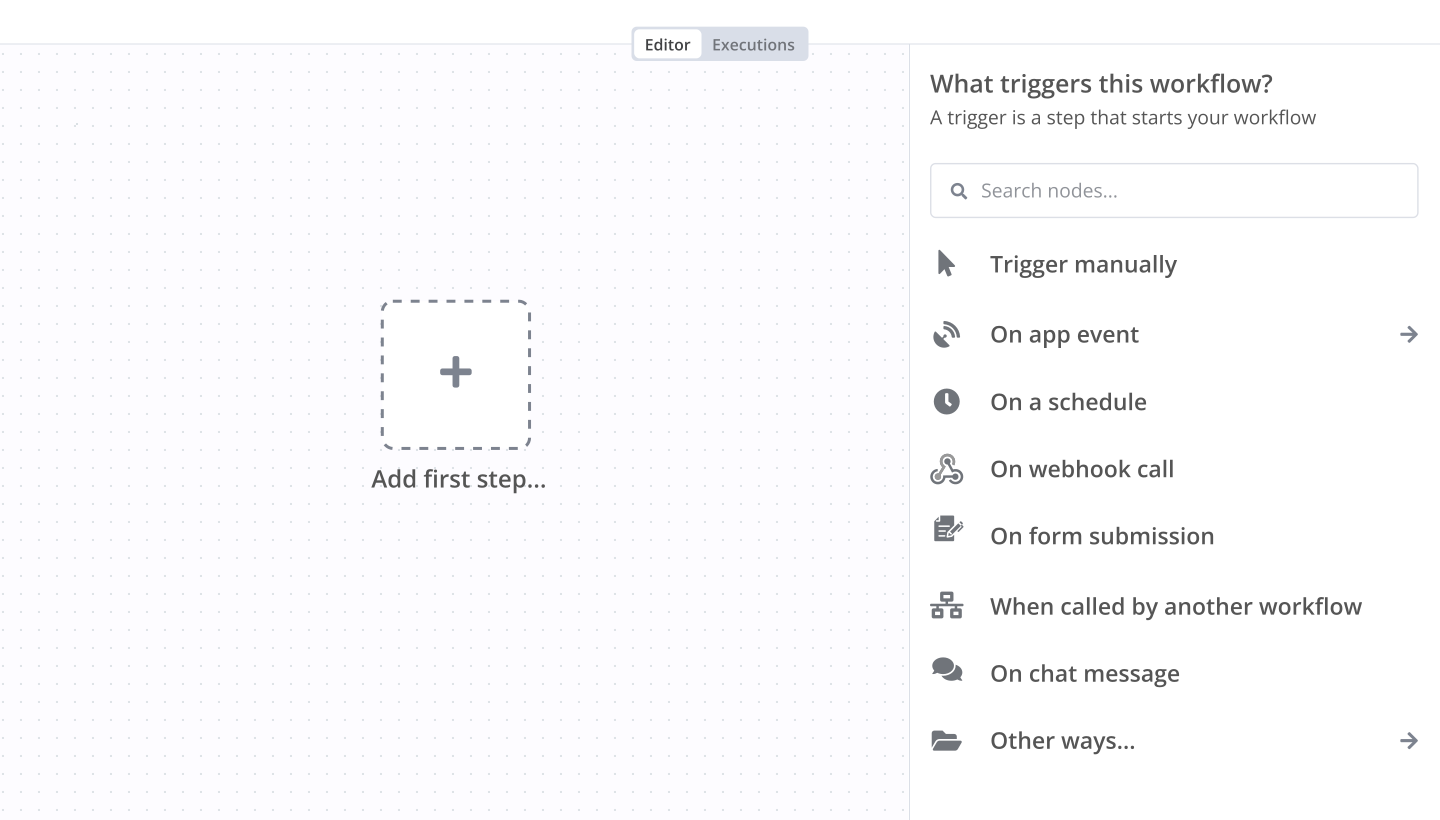
Create a new workflow and add the first step

In n8n, click the "Add workflow" button in the Workflows tab to create a new workflow. Add the starting point – a trigger on when your workflow should run: an app event, a schedule, a webhook call, another workflow, an AI chat, or a manual trigger. Sometimes, the HTTP Request node might already serve as your starting point.

Mistral AI and Ritekit integration: Create a new workflow and add the first step

Automate loan document analysis with Mistral OCR and GPT for underwriting decisions

LOB Underwriting with AI This template ingests borrower documents from OneDrive, extracts text with OCR, classifies each file (ID, paystub, bank statement, utilities, tax forms, etc.), aggregates everything per borrower, and asks an LLM to produce a clear underwriting summary and decision (plus next steps). Good to know AI and OCR usage consume credits (OpenAI + your OCR provider). Folder lookups by name can be ambiguous—use a fixed folderId in production. Scanned image quality drives OCR accuracy; bad scans yield weak text. This flow handles PII—mask sensitive data in logs and control access. Start small: batch size and pagination keep costs/memory sane. How it works Import & locate docs: Manual trigger kicks off a OneDrive folder search (e.g., “LOBs”) and lists files inside. Per-file loop: Download each file → run OCR → classify the document type using filename + extracted text. Aggregate: Combine per-file results into a borrower payload (make BorrowerName dynamic). LLM analysis: Feed the payload to an AI Agent (OpenAI model) to extract underwriting-relevant facts and produce a decision + next steps. Output: Return a human-readable summary (and optionally structured JSON for systems). How to use Start with the Manual Trigger to validate end-to-end on a tiny test folder. Once stable, swap in a Schedule/Cron or Webhook trigger. Review the generated underwriting summary; handle only flagged exceptions (unknown/unreadable docs, low confidence). Setup steps Connect accounts Add credentials for OneDrive, OCR, and OpenAI. Configure inputs In Search a folder, point to your borrower docs (prefer folderId; otherwise tighten the name query). In Get items in a folder, enable pagination if the folder is large. In Split in Batches, set a conservative batch size to control costs. Wire the file path Download a file must receive the current file’s id from the folder listing. Make sure the OCR node receives binary input (PDFs/images). Classification Update keyword rules to match your region/lenders/utilities/tax forms. Keep a fallback Unknown class and log it for review. Combine Replace the hard-coded BorrowerName with: a Set node field, a form input, or parsing from folder/file naming conventions. AI Agent Set your OpenAI model/credentials. Ask the model to output JSON first (structured fields) and Markdown second (readable summary). Keep temperature low for consistent, audit-friendly results. Optional outputs Persist JSON/Markdown to Notion/Docs/DB or write to storage. Customize if needed Doc types: add/remove categories and keywords without touching core logic. Error handling: add IF paths for empty folders, failed downloads, empty OCR, or Unknown class; retry transient API errors. Privacy: redact IDs/account numbers in logs; restrict execution visibility. Scale: add MIME/size filters, duplicate detection, and multi-borrower folder patterns (parent → subfolders).

Build your own Mistral AI and Ritekit integration

Create custom Mistral AI and Ritekit workflows by choosing triggers and actions. Nodes come with global operations and settings, as well as app-specific parameters that can be configured. You can also use the HTTP Request node to query data from any app or service with a REST API.

Mistral AI supported actions

Supported methods for Ritekit

Delete
Get
Head
Options
Patch
Post
Put

To set up Ritekit integration, add the HTTP Request node to your workflow canvas and authenticate it using a generic authentication method. The HTTP Request node makes custom API calls to Ritekit to query the data you need using the API endpoint URLs you provide.

See the example here

Requires additional credentials set up

Use n8n's HTTP Request node with a predefined or generic credential type to make custom API calls.

Mistral AI and Ritekit integration details

Mistral AI

Mistral AI

Mistral AI develops high-performance, open‑source large‑language models that are efficient and customizable. Their flagship offerings power “Le Chat,” a conversational AI app (web/mobile) with features like web search, image generation, OCR and enterprise integrations, all usable via API or on‑premises.

Ritekit

Ritekit

RiteKit is a social media optimization tool that offers various features like hashtag suggestions, image optimization, text analysis, and post scheduling, helping users to enhance the reach and engagement of their social media posts.

FAQ about Mistral AI integrations

Looking to integrate Slack and VirusTotal in your company?

Three colleagues talking around laptops at a shared desk

Trusted by teams building smarter workflows.

Why

Why use n8n to integrate Mistral AI with Ritekit

Handle branching, merging and iteration easily. Pause your workflow to wait for external events.

Re-run single steps to test changes in no time. And pin your data to avoid generating trigger events every time you execute.

Your data is displayed alongside your settings, making edge cases easy to track down.

Use 1000+ workflow templates available from our core team and our community.

Copy and paste, easily import and export workflows.
Simple enough to 
understand + sophisticated 
enough to ship

Man in a brown jacket working at his desk by a window