How to choose the right tool
The clearest dividing line between these platforms’ use cases is who will build and maintain the automation. n8n makes more sense when workflows need to be accessible to people who aren’t on the engineering team, while Windmill is geared toward teams that want code to remain the primary interface.
Choose n8n if
Choose n8n if you want the workflow itself to be the main interface for automation. It’s a strong Windmill alternative when you want to build visually, bring in code where it’s useful, and give people outside engineering a workflow they can actually follow. n8n also provides more AI functionality as native workflow components, including agents, memory, vector stores, and RAG. When processing data in batches, keep in mind that n8n is best suited for medium-sized data sets. Processing extremely large data sets (hundreds of millions of records) in n8n may take longer.
Choose Choose Windmill if
Choose Windmill if your automation is primarily developer-owned and starts with code. It’s a strong n8n alternative for engineering teams that mainly need to run heavier scripts on a schedule, expose them as internal tools, or connect them into larger flows.
Pick the platform that matches how your team builds
These platforms optimize for different builders. n8n puts the workflow on a visual canvas and lets you reach for code when you need it. Windmill starts with code and gives developers tools for turning scripts into workflows and internal apps.
If you want visual automation without giving up developer flexibility, n8n is likely the better fit. If your team prefers to keep automation centered on scripts and familiar development practices, Windmill has a compelling model.
Considering n8n for your automation needs? Try n8n Cloud for free to start building today.





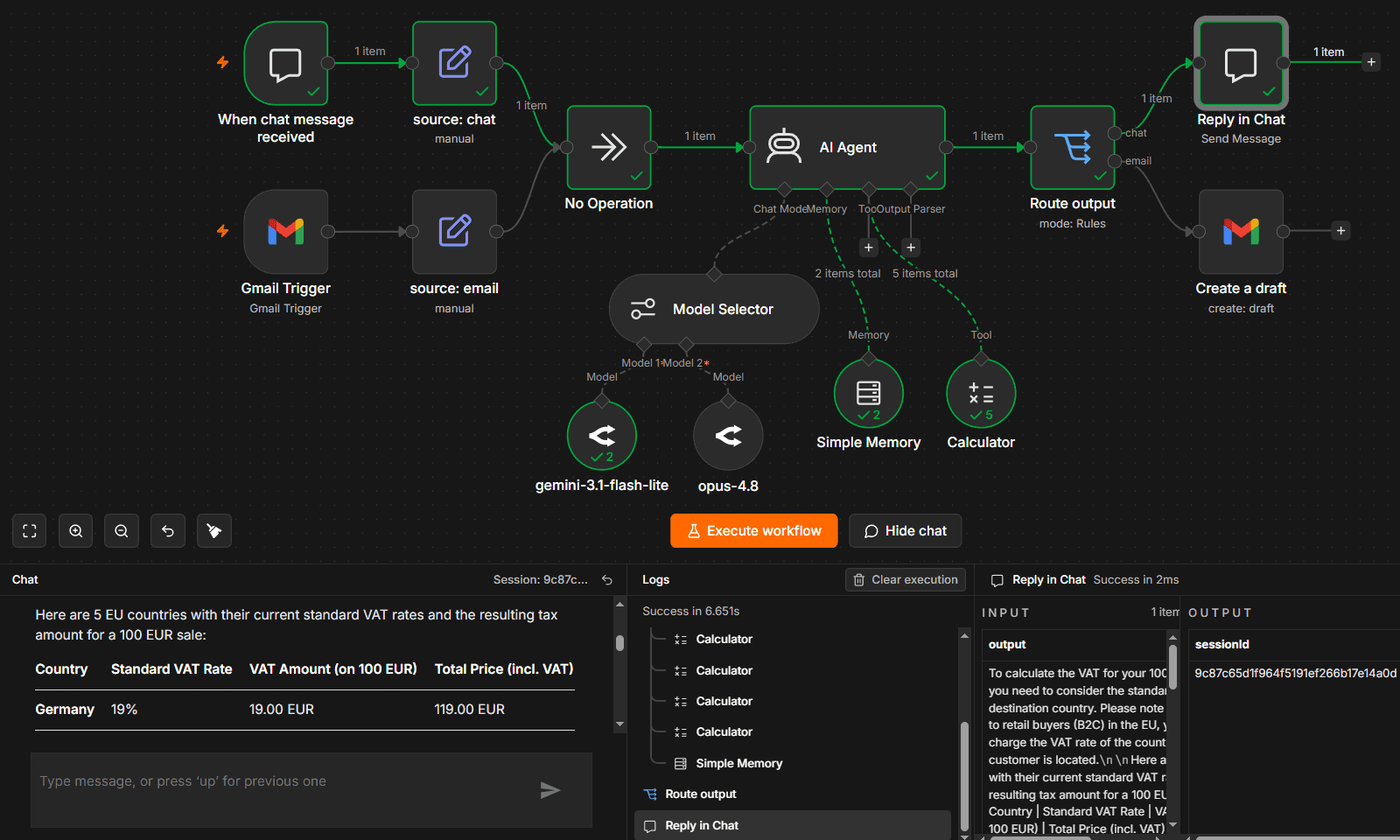 n8n offers a unified canvas where users develop and debug automations: both deterministic logic and AI agents
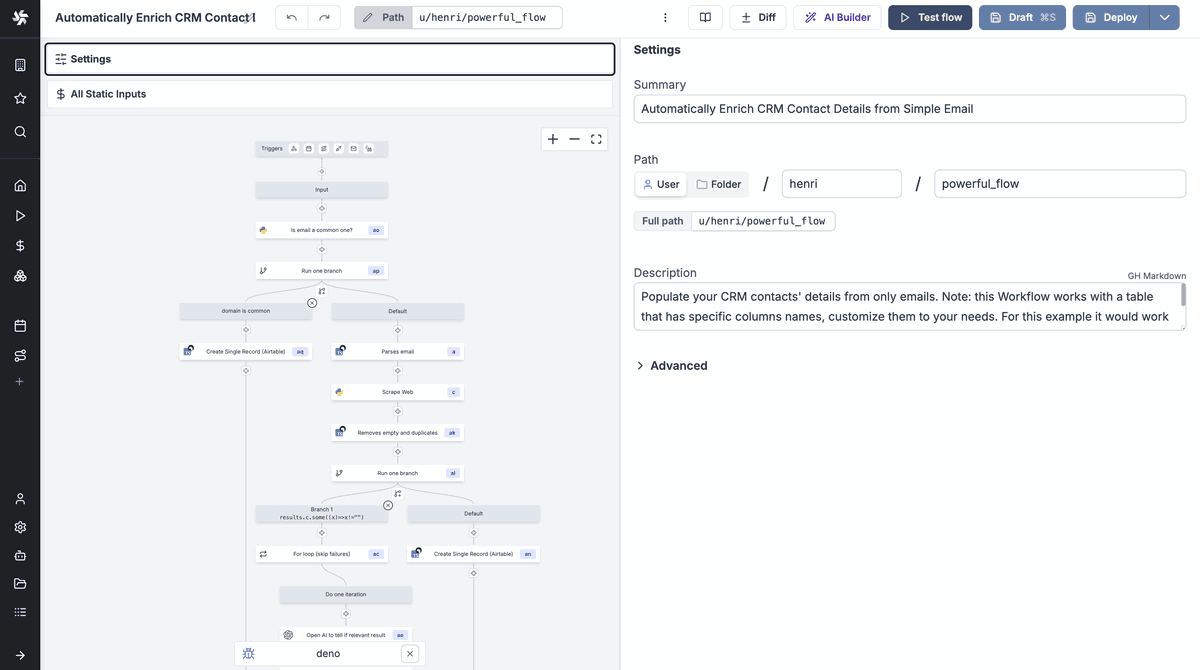 Windmill offers a low-code UI where users can create scripts and orchestrate them with branching logic, loops etc.
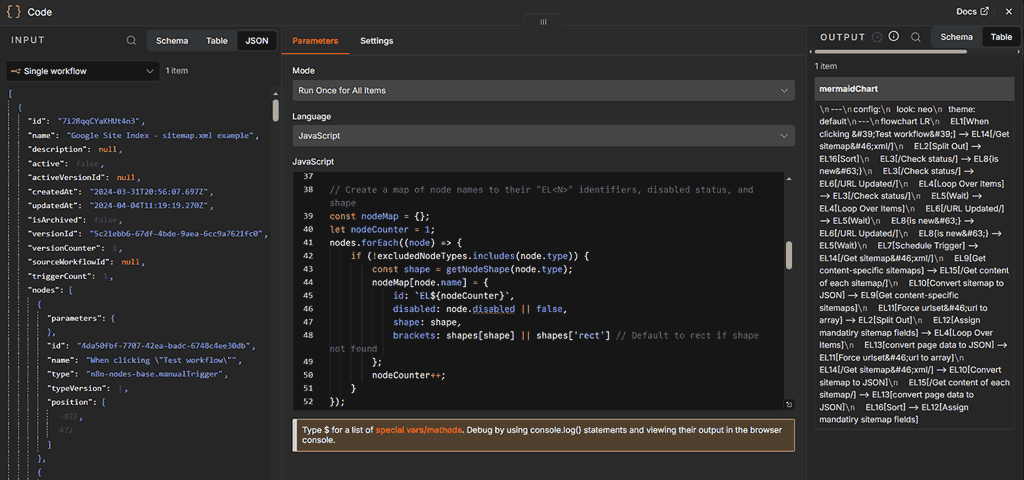 When the standard nodes are not enough, users can fallback to the Code Node and run native JS / Python scripts
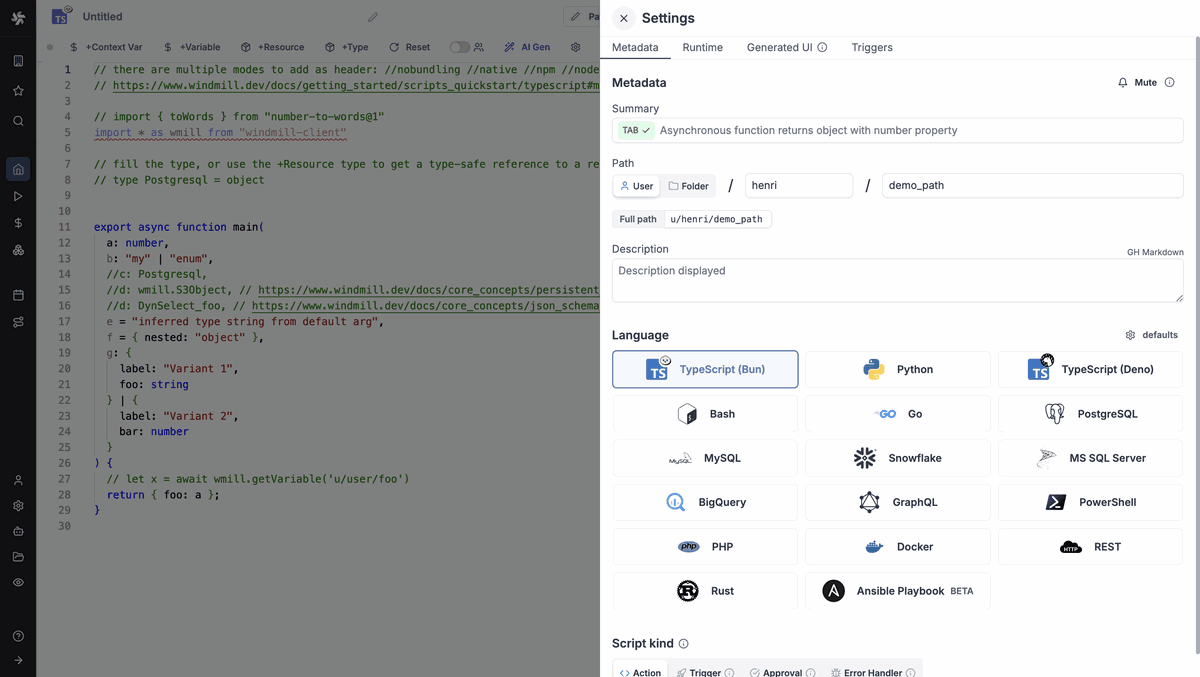 Windmill offers a built-in code editor for several programming and scripting languages