See llms.txt for all machine-readable content.

n8n vs. LangChain: Which is Right for You?

Choosing between a visual builder and a pure code framework depends on your goals: build a complex system from scratch, or ship AI apps quickly?

This is the core difference between n8n and LangChain: LangChain offers LLM abstractions for developers; n8n provides a low-code layer for automating workflows.

This guide can help you decide which option is right for you — and why.

LightningLightning vs symbol

Use n8n when

You need to build and deploy production-ready AI workflows with visual orchestration, built-in integrations, and accessible observability

Use LangChain when

You need to build custom AI applications with fine-grained control over agent logic, retrieval, and LLM behavior in code.

LangChain vs. n8n: Key differences

The main difference between n8n and LangChain is coding complexity. It boils down to where you want to spend your engineering time. n8n focuses on orchestrating production-ready workflows from a clean visual interface. In addition to standard workflows, n8n has several nodes based on the JavaScript LangChain library. Meanwhile, original LangChain provides granular control to build internal AI logic from the ground up.

Here’s a quick summary of the main distinctions:

Orchestration Model

Stateful workflow engine with visual node-based flows and automated retries

Manual state management (or via LangGraph); code-based library

Primary Interface

Visual drag-and-drop canvas and JS/Python nodes

Code-first (Python, JavaScript/TypeScript)

Agent Architecture

Native AI agent nodes (based on LangChain) with built-in tool access and workflow control

Modular components (chains, agents) defined in code

Multi-agent Support

Supported via agent-to-agent subworkflows and logic nodes

Flexible via LangGraph for stateful and cyclic agent workflows

Deployment Options

Cloud, Docker, or self-hosted via npm

Runs anywhere your app code is deployed; library-based

Self-hosting

Strong self-hosting support; deployable on VPC or on-premises for data privacy

Open-source with full infrastructure stack management

Integration Breadth

1000+ prebuilt nodes (Slack, GitHub, Salesforce) and webhooks

Extensive community integrations (API wrappers and SDKs)

LLM Provider

Native nodes for multiple providers, including OpenAI, Anthropic, and local models (via Ollama)

Supports most major AI LLM via providers

Observability

Native execution logs, error-triggering, and visual debugging

Limited built-in observability; LangSmith adds deep traces and evals

Enterprise Governance

Role-based access control (RBAC), SSO, and audit logs

Governance implemented in the parent application; typically requires custom controls

License Model

Fair-code under the Sustainable Use License; self-hosted Community Edition available; cloud enterprise plans

MIT License (fully open source)

Best-fit Use Case

Automating business processes at scale and launching production-ready AI agents

Research, prototyping, and building custom AI-first libraries

What are n8n and LangChain built for?

Both tools assist AI development, but they approach the work from different angles. n8n acts as a visual conductor for your entire stack, while LangChain provides specialized parts to build a custom engine.

Union.svg

What’s n8n?

n8n automates custom, traceable business processes. It lets teams connect nodes to build workflows visually. This drag-and-drop interface makes it easy for non-technical users, but it’s still an in-depth, engineer-friendly solution. Wherever engineers need custom logic, they can dive in and write custom logic.

Teams can also use 1000+ integrations to handle nearly any task, from simple queries to complex enterprise systems, while maintaining tight control. With advanced LLM routing and escalation, n8n lets companies achieve automation, security, and quality simultaneously.

What’s LangChain?

LangChain is a code-based library that helps developers build AI applications from the ground up. Instead of a visual canvas, you work entirely with Python or TypeScript/JavaScript to connect LLMs to data.

This framework gives you detailed control over AI and data connectivity, but it comes at the cost of a steep learning curve. You have to manage tool calling, memory, and state schemes manually via code.

AI capabilities

These tools handle complex logic differently: One uses a structured, visual flow to manage the data, while the other uses code-defined instructions. Let’s take a look.

n8n

n8n runs on an event-driven model where each node performs a specific action, such as fetching data from an API or transforming a JSON object. You connect these nodes with a visual canvas, mapping out a deterministic data path. This creates direct observability. If a workflow fails, you can see where the problem occurred and why — without leaving the platform.

When it comes to AI agents, n8n relies on the LangChain. It has multiple nodes that wrap LangChain functionality and natively support tool calling as well as multi-agent systems. For instance, one agent might handle document analysis and another sends the results to Slack. Developers can also configure n8n to use memory nodes, which allow agents to decide about the next steps based on user input.

LangChain

LangChain is exclusively code-based, so you define manual chains instead of using a canvas. Chains are the sequences of operations that pass data through prompts, tools, retrievers, and models.

This framework provides the necessary abstractions to build tools and manage memory in Python and JavaScript. It’s flexible, but writing the logic that handles retries and errors is entirely your responsibility. This requires extensive technical skills, which is a downside for less experienced teams.

LangChain relies on LangGraph for complex interactions — this library acts as an additional layer that facilitates stateful, cyclic graphs for agent workflows.

Integration ecosystem

The strength of an AI tool depends on what it can talk to. While some frameworks lock you into specific stacks, both n8n and LangChain aim for flexibility. But they achieve it in different ways.

n8n

n8n takes a provider-agnostic approach. You aren’t stuck with using just one LLM, so it’s easy to switch between models from multiple providers, or self-hosted options by simply changing a node. It also supports the model context protocol (MCP). The MCP lets your AI agents connect to servers and access local data and tools without custom written API integrations.

The platform features more than 1000 native nodes that handle OAuth and credentials. Workflows that you created in the past can be converted into an agentic tool, this way an Agent can reliably perform multistep actions by simply calling a sub-workflow.

💡Explore the n8n integrations library to see how nodes connect your existing stack to workflows — without any custom code.

LangChain

LangChain also relies on the model-agnostic approach, but it uses a different strategy. It provides a consistent interface to call dozens of different LLMs, which lets you test how different models handle the same prompt or task. This flexibility allows developers and researchers to experiment with new models and define LLMs that fit distinct use cases.

However, a major gap exists for non-AI systems. Unlike n8n, LangChain doesn’t ship with a library of prebuilt connectors for standard SaaS tools. If you need to pull data from a CRM or send a message to a project management tool, you’ll need to write the Python or JavaScript code (or rely on third-party libraries).

Customization and developer power

n8n is easy to customize, while in-depth LangChain customization is tedious. LangChain is more difficult overall, but writing custom code is more natural once devs master the main concepts.

n8n

n8n doesn’t limit you to prebuilt nodes. You can connect to custom APIs via generic HTTP Request node. n8n also lets you use custom expressions to inject dynamic data into any field. The Code node (Python or JavaScript) helps with more complex transformations or additional functionality with external libraries. Finally, you can even create custom chains with the LangChain code node. This gives you a high level of flexibility without the overhead of a full framework.

You can self-host n8n and even extend it by creating custom nodes. All these features help with integrating workflows directly into internal systems. But you might hit a ceiling if your AI agents need fine-grained control over the underlying LLM abstractions.

LangChain

If you want full control over your AI agents, LangChain is a strong option. Because there’s no visual layer, you can manage every aspect directly in code. LangChain allows developers to make tailored chains and stateful agent loops that handle edge case situations a standard n8n node might miss.

The drawback of this control is how much work lands on the developer’s desk. You’ll be looking at much longer build times and a complex process to get to a production-ready solution. For most teams, it’s probably best to reserve LangChain for a proof of concept that needs unique logic or to run tests for research purposes.

User experience (UX)

While n8n has a user-friendly interface that appeals to most teams, LangChain is comfortable for experienced engineers. Here’s a closer look.

n8n

n8n offers a highly intuitive UX, making it accessible to both tech-savvy and non-technical users. The visual-first approach lets you see the input and output clearly for each node. If one step fails, troubleshooting is easy. You can flip through traces and spot exactly where the issue is.

Engineers can use custom JavaScript or Python nodes for complex logic, but they never have to leave the interface to debug or deploy. This creates a tight feedback loop allowing you to move from proof of concept to production-ready output.

LangChain

LangChain has no visual interface, so your UX is basically an IDE for a code-only environment. You need a full engineering setup to get anything running.

While this is a familiar environment for developers, it makes observability difficult. You can’t check visuals to catch a failure point — you’ll have to browse logs or use external tools like LangSmith.

Deployment and self-hosting

Unique deployment methods affect your data safety and maintenance burden. While n8n provides built-in governance, LangChain asks you to construct security walls yourself.

n8n

n8n works well for teams with strict data residency or SOC 2 requirements. You can deploy it in air-gapped environments via Docker or npm. A self-hosted strategy ensures data doesn’t leave your system and provides full control over the execution environment and LLM connections.

For enterprise teams, n8n includes native governance features like RBAC, SSO, and audit logging. These tools are available right out of the box, letting you manage permissions and track changes without building custom tooling.

LangChain

LangChain is a library, not a platform. Its “deployment” is wherever you run the application code. While this offers flexibility, it means you’re responsible for the entire operational surface. You manually set up state management, error handling, and security protocols for every AI app.

The tool offers several paid features, such as LangSmith Platform for Agents’ deployment and observability. If you would like to stay with the open-source core LangChain library, you’ll need to write the entire governance logic from scratch or use third-party integrations.

Security

After deployment, you’ll need a strong internal security model to manage users and protect sensitive data. While n8n provides a pre-configured system, LangChain requires custom work.

n8n

n8n lets you maintain strict governance standards without building custom internal tools. You get built-in RBAC capabilities to define who can create, edit, and execute workflows. This native access system ensures that sensitive API credentials and data is restricted to authorized users.

When it comes to deep auditing, n8n maintains detailed logs that track changes made within the platform. Because you manage these features within a self-hosted instance, you maintain total data residency. This makes n8n a good fit for highly regulated industries like finance and healthcare, where legal requirements dictate least-privilege access rights.

LangChain

LangChain doesn’t ship any built-in security solutions or identity models with its core library. It has no native concept of users, roles, and permissions. Developers carry the full weight of designing and implementing:

  • Authentication
  • Multi-tenancy
  • Access control

For instance, if you need to restrict access to certain application chains, you’ll need to write code to enforce those boundaries. This is labor intensive, but it can be useful to experienced security professionals or companies with niche security concerns.

Pricing and cost model

The total cost of tools depends on how you use them. n8n charges for the platform’s automation, while LangChain’s costs come from development efforts or the paid features from the LangSmith platform. Here’s a side-by-side comparison:

Pricing Unit

Per execution of a full workflow run

Per seat and the amount of traces

Free Tier

Self-hosted Community Edition

1 seat and 5,000 free traces per month

Cloud Starting Price

$20 per month (2,500 executions)

$39 per user per month (plus overages)

Primary Cost Variables

Total workflow runs

Number of traces

💡 Both n8n and LangChain library expect users to bear extra costs on items like infrastructure, compute, and LLM data storage.

n8n

n8n uses an execution-based model, so you pay for workflow completions instead of individual steps. This makes it simple to predict usage costs and calculate your monthly bill.

If your team owns the servers, try the Community Edition for free. This is a great way to scale AI automation projects without breaking the budget. Keep in mind that you’ll still need to cover server costs.

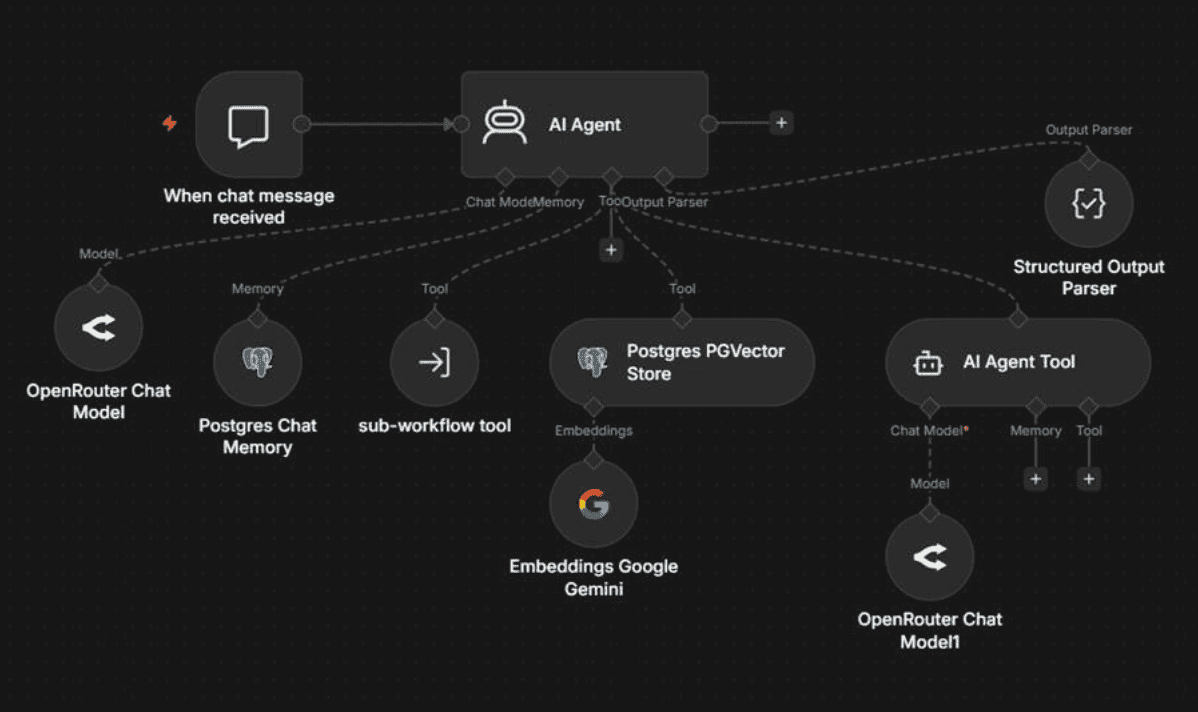
💡 n8n has introduced the concept of cluster nodes to support LangChain functionality. There are root-nodes and connected sub-nodes which extend the root node’s functionality. You can even nest sub-nodes when needed.

n8n workflow canvas showing a chat-triggered multi-agent setup with Postgres memory, PGVector store, and a nested AI Agent Tool.

LangChain

LangChain is a free library, but several products in the LangChain ecosystem are paid and usage driven. LangSmith is the main product that charges based on the number of seats and LLM traces ingested. Many teams end up springing for the paid version, as the free tier restricts features like debugging and observability.

Even if you opt for the free version, consider which tools you need to run LangChain. Many companies need vector databases and state storage to maintain their systems.

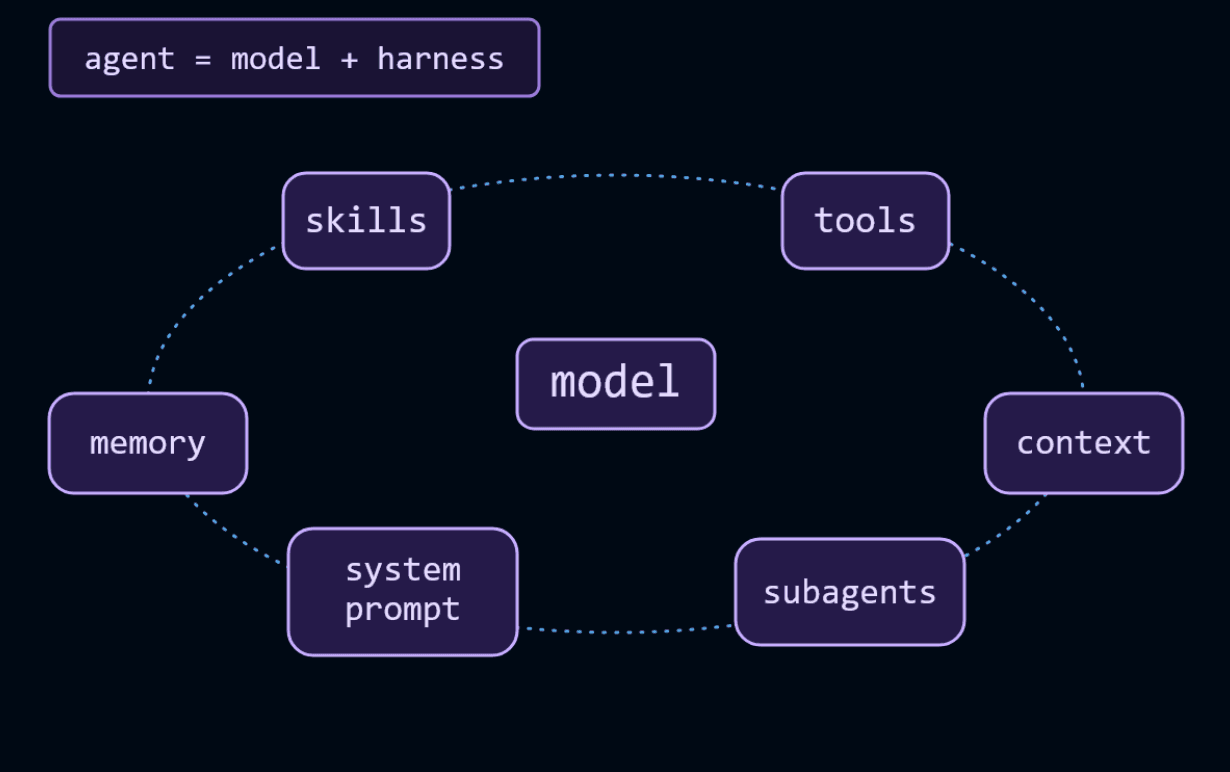
Diagram of an AI agent architecture: model at center, surrounded by skills, tools, context, subagents, system prompt, and memory.

When to use n8n vs. LangChain

When to choose n8n

n8n provides a faster path to stable and scalable deployment. It’s ideal for both technical and non-technical users.

Choose n8n when you need to ship production-ready AI automation without building your own foundation. It’s ideal for developers who need to connect LLMs to hundreds of existing SaaS tools. n8n makes it easy to build bespoke RAG systems that combine proprietary data sources with LLM-powered workflows. The connectors are built in, and the visual UX uses straightforward drag-and-drop mechanics. It’s also a strong fit if projects require a self-hosted, SOC 2 compliant environment with built-in RBAC audit logs.

When to consider LangChain

LangChain provides a high level of control for projects where AI logic is the core of the infrastructure. It relies on technical expertise, so it’s a good fit for teams with senior developers, AI engineers, and experienced security professionals.

Consider LangChain when you’re building custom retrieval pipelines and complex agent loops via LangGraph. It also lets you implement advanced cognitive patterns that visual nodes can’t easily replicate.


Achieve flexibility and low-code speed with n8n

While LangChain offers the building blocks for custom AI research and library development, n8n provides the production-ready infrastructure to set up models quickly and efficiently. By focusing on rapid, reliable automation, n8n lets you bypass tedious integration and security work. Teams can focus entirely on high-value AI logic, constructing functional pipelines and improving them through observation and iteration.

See how n8n fits your production environment: Set up a Cloud account today, or self-host a Community Edition.

FAQs

FAQ

Explore more n8n alternatives

n8n vs. Flowise

Build a better tech stack with help from this n8n versus Flowise comparison, which explores how each platform handles automation and LLM agent workflows.

Read more

n8n vs. CrewAI

Compare n8n versus CrewAI to determine the best architecture for your team. Learn how both handle multi-agent systems, integrations, and observability.

Read more

n8n vs. Node-RED

Find the best fit for your stack with this n8n vs Node-RED comparison. Review developer ergonomics, scaling, and AI nodes and integrations.

Read more

n8n vs. Make

If you’ve run into limits with Make’s operation-based pricing, data caps, or cloud-only setup, n8n might be a more flexible and cost-efficient alternative.

Read more