
Prove your workflows work
Not everyone understands the Python that coding agents create. Anyone can understand a visual workflow you can open up and check the outputs step by step.
See llms.txt for all machine-readable content.
Every tool in your IT stack automates its own step.
With n8n, you own everything that happens between them.
Where our workflows make the work flow


500+ pre-built nodes for the apps you’re already logged in to.
Custom API connections for everything else.


Fully self-hostable, shield behind Slack or teams, expose nothing to the internet
SSO/SCIM, SAML and LDAP encrypted secret store, version control, RBAC permissions
Audit logs and log streaming to your SIEM, workflow history, real-time alerts, usage dashboards.
Workflows for the repeatable. Agents for the ambiguous. Humans for
the sensitive. Build all three in n8n — and own the layer that connects them.
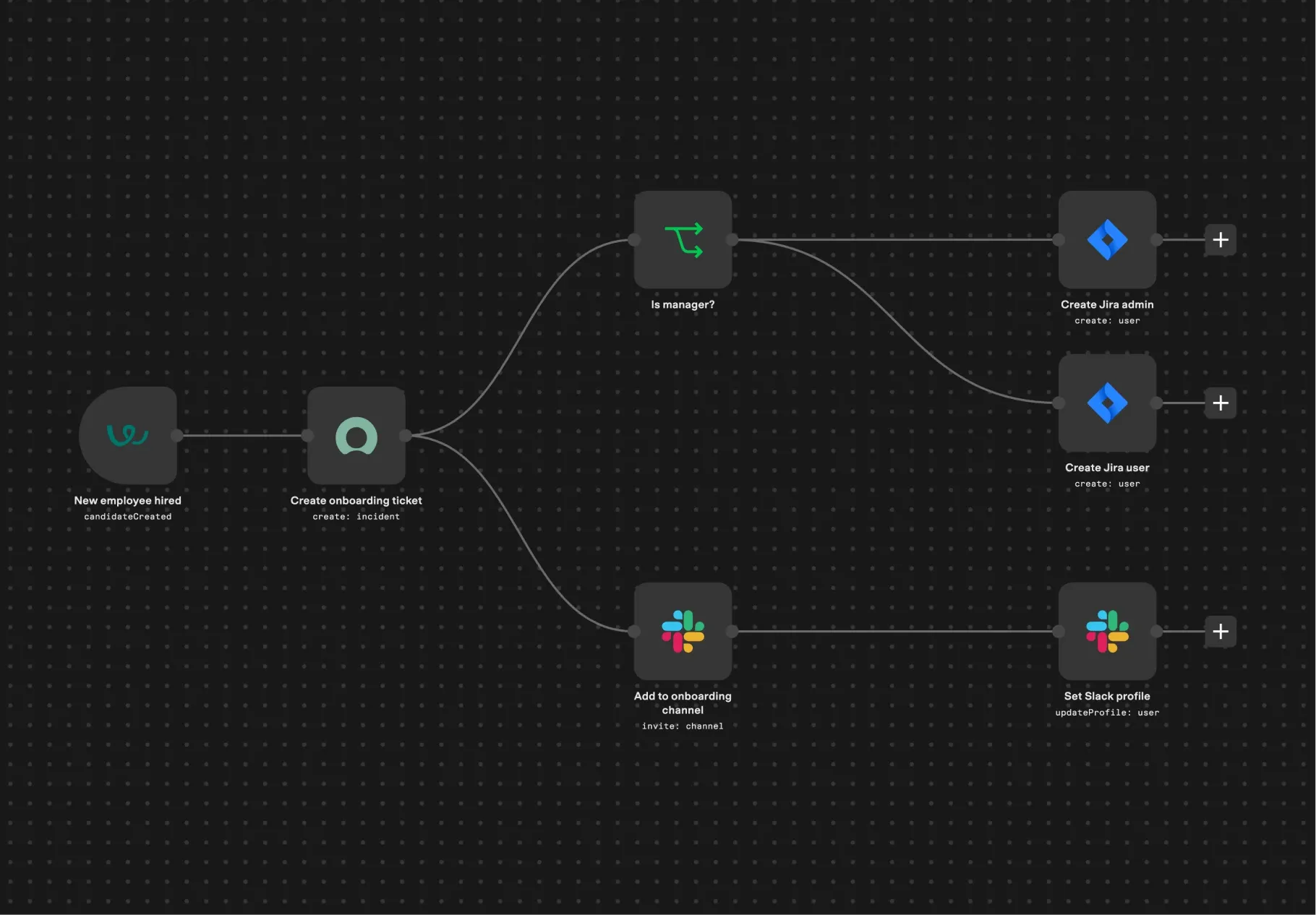
HR confirms a hire. One workflow creates the identity, provisions the apps, enrolls the device. The same flow handles role changes and the exit, logging every step. Nothing breaks between your IdP and one of your apps.
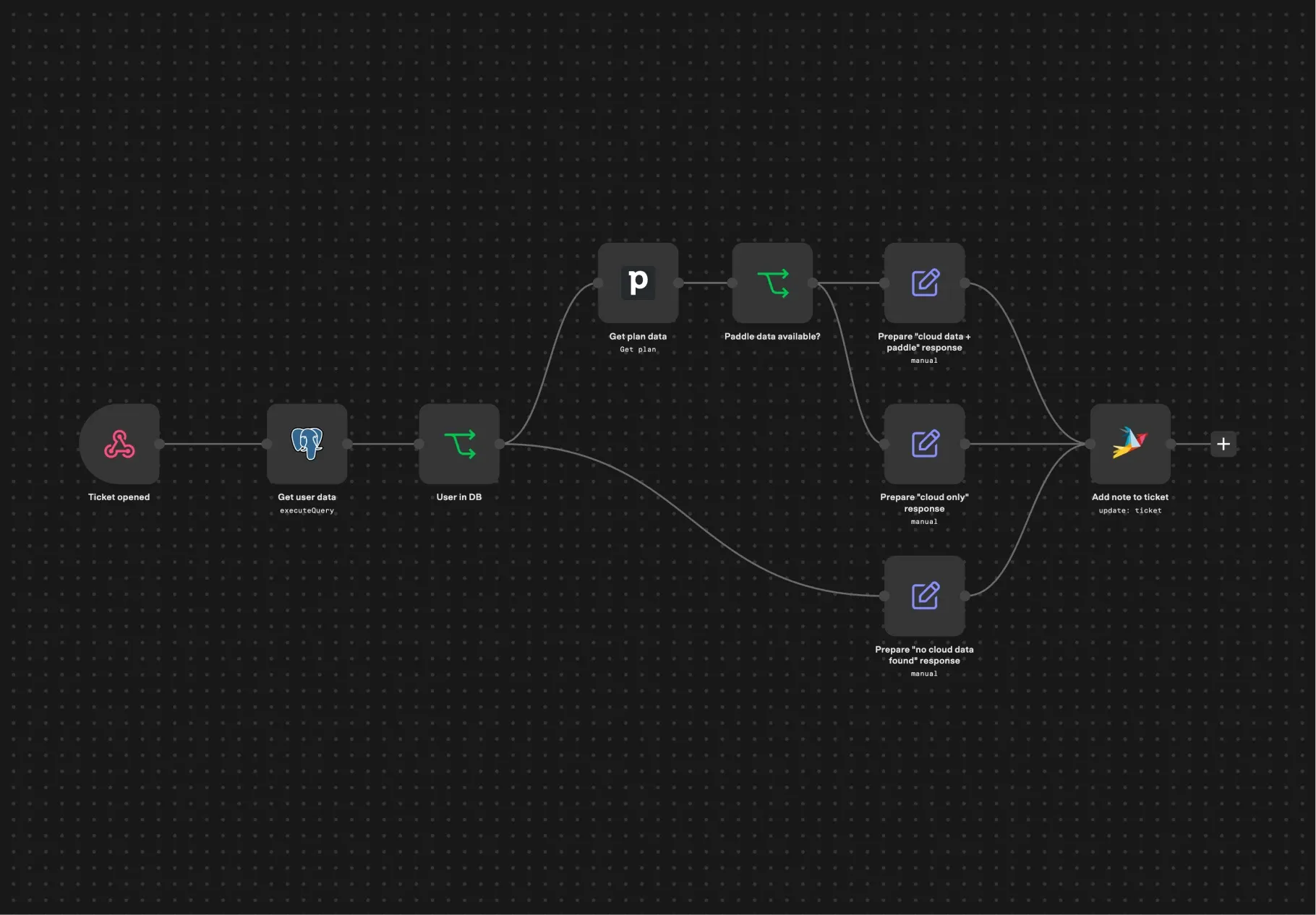
“Why can’t I access GitHub?” shouldn’t be a question you have to answer. An agentic workflow reads the request, checks roles and groups, and finds what’s missing. Restoring access is a workflow. If it’s privileged, it waits for you.
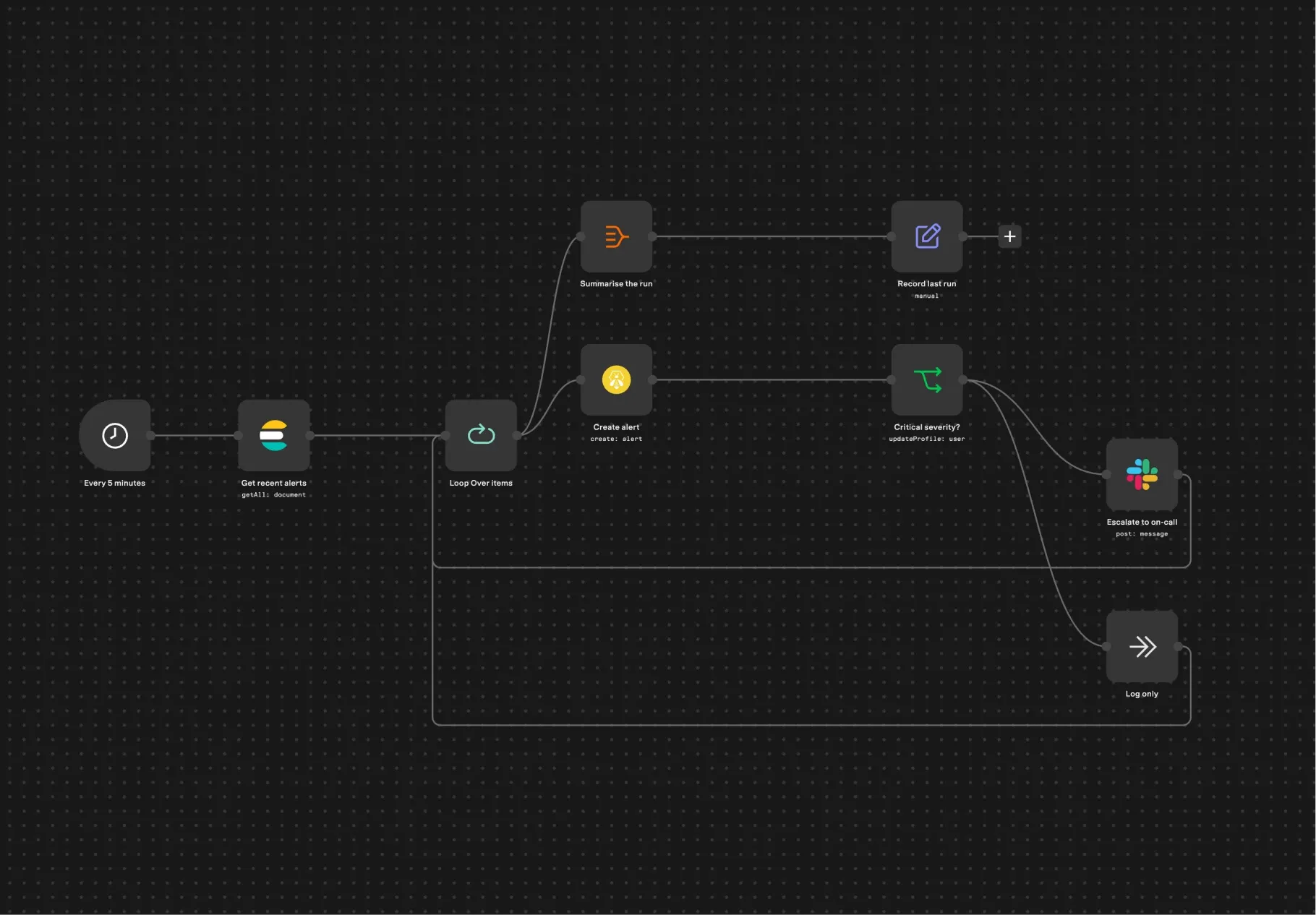
Agentic workflows pull relevant logs, identify the service owner, and check recent changes — before anyone opens the ticket. You get a summary in Slack. The runbook is one tap away. And doesn’t until you say so.
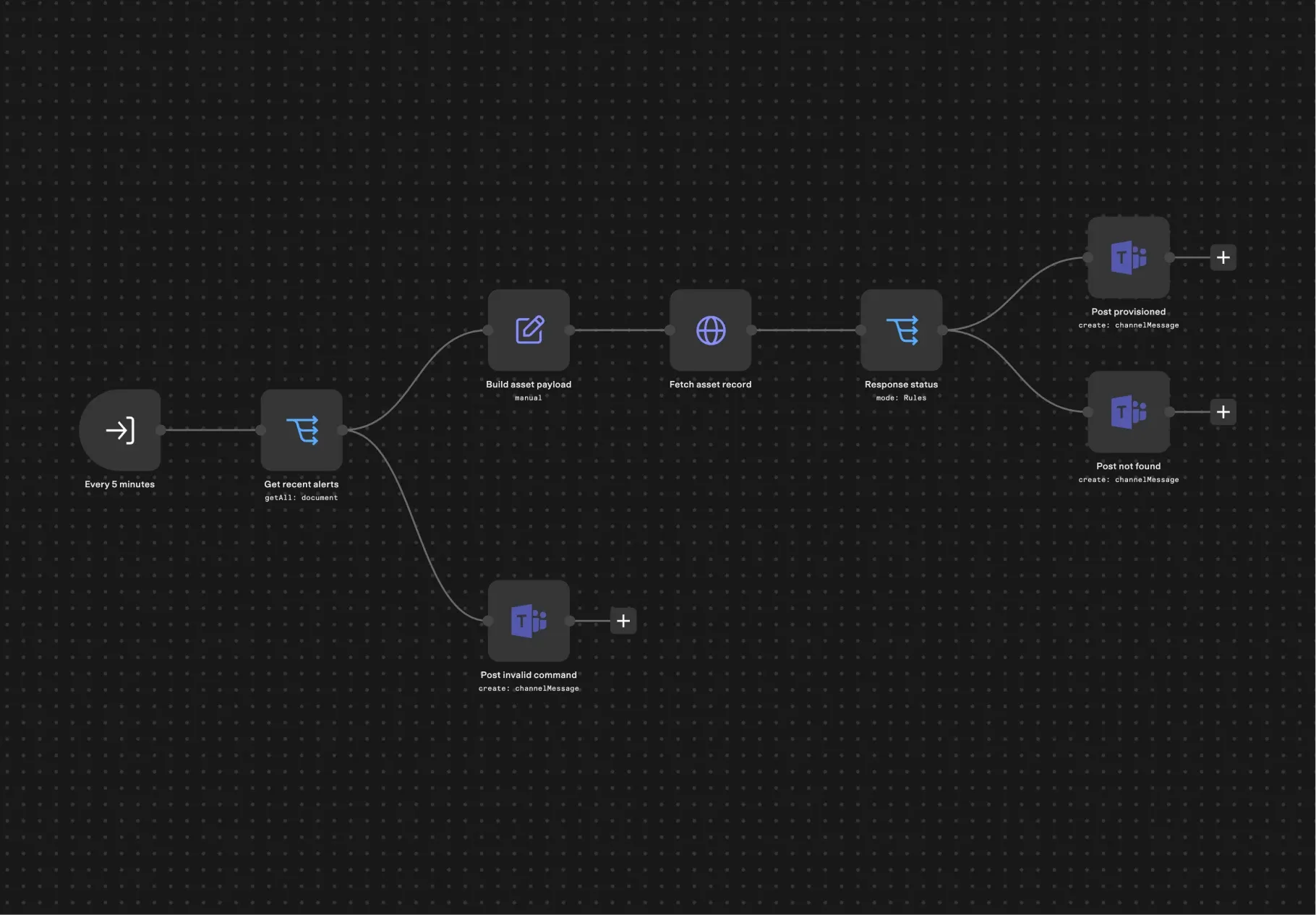
What apps are you paying for that no one uses? Who has admin on the production account? What devices missed the last patch? You don’t want another console to check. You want the answer where you already are.
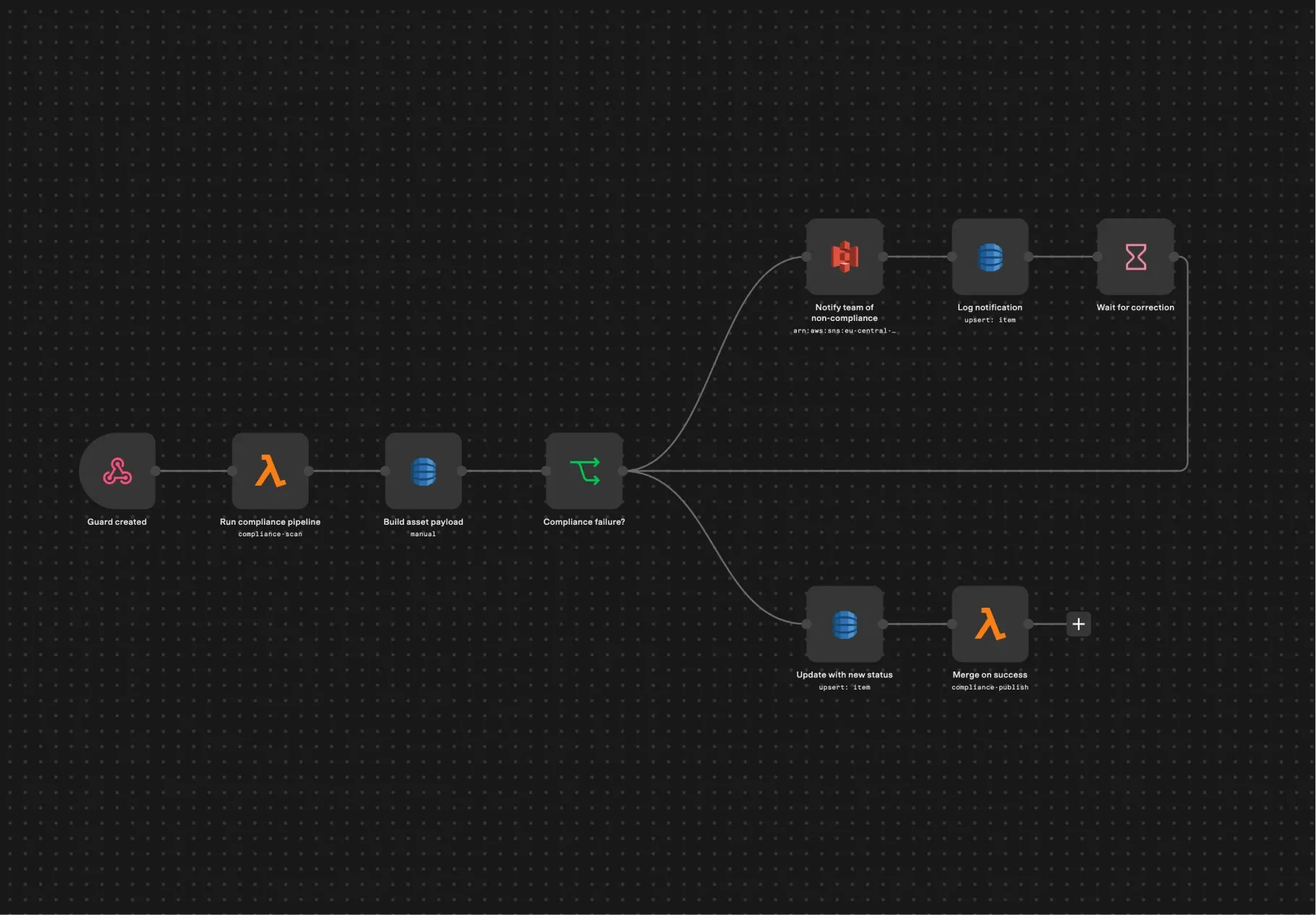
An engineer requests admin rights on a production database. n8n checks it against policy, routes it to the system owner, and grants access on approval. Who asked. Who said yes. What changed. Logged as it happens. Not reconstructed next March.
You want to know what you can automate — and stay in control.
Here are the answers you’re looking for:

I have found the holy grail of automation.

“We implemented security regulations with n8n, including logging and using a vault for credentials. Each team is scoped to their own project, ensuring they can only create workflows and access credentials within their own area, keeping all other teams' information secure.”
Not everyone understands the Python that coding agents create. Anyone can understand a visual workflow you can open up and check the outputs step by step.

n8n is AI agnostic. Build agents and backup agents on different models so when one has an outage, your customers don’t even notice.

n8n’s AI agent guardrails are the difference between a sophisticated toy and a tool you can run reliably in production.
1200+ community-built ITOps templates make getting started simple.
Even if you’re new to agentic workflows.



“We have seen drastic efficiency improvements since we started using n8n. It’s incredibly powerful, but also simple to use.”
Dennis Zahrt
Director of Global IT Service Delivery, Delivery Hero

“We like to think often of n8n as our super glue – it’s something you always have in your toolbox because it is always useful.”
Giuliano Lesa
IT Architect, Deda.Tech