E-commerce price tracker with ScrapeGraphAI, MongoDB, and Mailgun alerts
Product Price Monitor with Mailgun and MongoDB
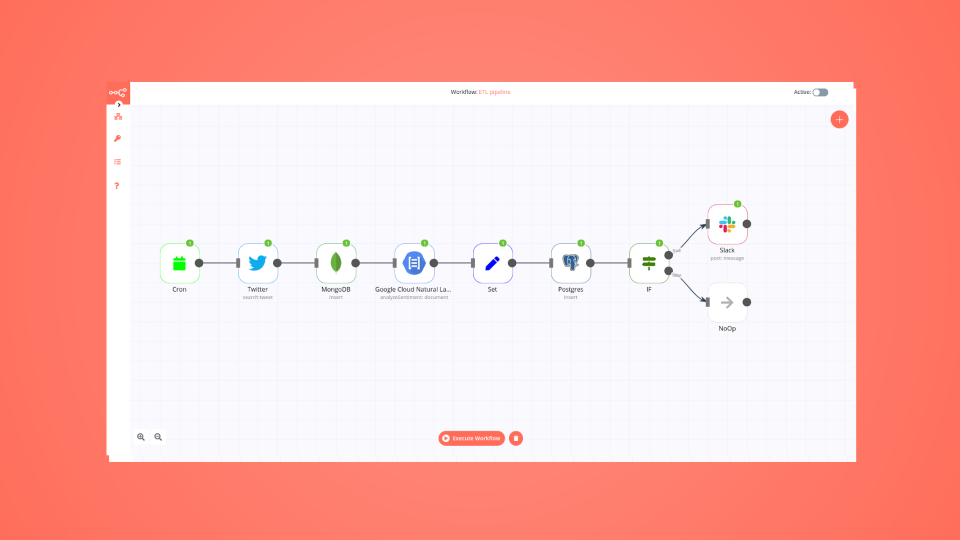
Workflow Preview Image
⚠️ COMMUNITY TEMPLATE DISCLAIMER: This is a community-contributed template that uses ScrapeGraphAI (a community node). Please ensure you have the ScrapeGraphAI community node installed in your n8n instance before using this template.
This workflow automatically scrapes multiple e-commerce sites, records weekly product prices in MongoDB, analyzes seasonal trends, and emails a concise report to retail stakeholders via Mailgun. It helps retailers make informed inventory and pricing decisions by providing up-to-date pricing intelligence.
Pre-conditions/Requirements
Prerequisites
n8n instance (self-hosted, desktop, or n8n.cloud)
ScrapeGraphAI community node installed and activated
MongoDB database (Atlas or self-hosted)
Mailgun account with a verified domain
Publicly reachable n8n Webhook URL (if self-hosted)
Required Credentials
ScrapeGraphAI API Key – Enables web scraping across target sites
MongoDB Credentials – Connection string (MongoDB URI) with read/write access
Mailgun API Key & Domain – To send summary emails
MongoDB Collection Schema
| Field | Type | Example Value | Notes |
|-----------------|----------|---------------------------|---------------------------------------------|
| productId | String | SKU-12345 | Unique identifier you define |
| productName | String | Women's Winter Jacket | Human-readable name |
| timestamp | Date | 2024-09-15T00:00:00Z | Ingest date (automatically added) |
| price | Number | 79.99 | Scraped price |
| source | String | example-shop.com | Domain where price was scraped |
How it works
This workflow automatically scrapes multiple e-commerce sites, records weekly product prices in MongoDB, analyzes seasonal trends, and emails a concise report to retail stakeholders via Mailgun. It helps retailers make informed inventory and pricing decisions by providing up-to-date pricing intelligence.
Key Steps:
Webhook Trigger: Starts the workflow on a scheduled HTTP call or manual trigger.
Code (Prepare Products): Defines the list of SKUs/URLs to monitor.
Split In Batches: Processes products in manageable chunks to respect rate limits.
ScrapeGraphAI (Scrape Price): Extracts price, availability, and currency from each product URL.
Merge (Combine Results): Re-assembles all batch outputs into one dataset.
MongoDB (Upsert Price History): Stores each price point for historical analysis.
If (Seasonal Trend Check): Compares current price against historical average to detect anomalies.
Set (Email Payload): Formats the trend report for email.
Mailgun (Send Email): Emails weekly summary to specified recipients.
Respond to Webhook: Returns “200 OK – Report Sent” response for logging.
Set up steps
Setup Time: 15-20 minutes
Install Community Node
In n8n, go to “Settings → Community Nodes” and install @n8n-community/nodes-scrapegraphai.
Create Credentials
Add ScrapeGraphAI API key under Credentials.
Add MongoDB credentials (type: MongoDB).
Add Mailgun credentials (type: Mailgun).
Import Workflow
Download the JSON template, then in n8n click “Import” and select the file.
Configure Product List
Open the Code (Prepare Products) node and replace the example array with your product objects { id, name, url }.
Adjust Cron/Schedule
If you prefer a fully automated schedule, replace the Webhook with a Cron node (e.g., every Monday at 09:00).
Verify MongoDB Collection
Ensure the collection (default: productPrices) exists or let n8n create it on first run.
Set Recipients
In the Mailgun node, update the to, from, and subject fields.
Execute Test Run
Manually trigger the Webhook URL or run the workflow once to verify data flow and email delivery.
Activate
Toggle the workflow to “Active” so it runs automatically each week.
Node Descriptions
Core Workflow Nodes:
Webhook – Entry point that accepts a GET/POST call to start the job.
Code (Prepare Products) – Outputs an array of products to monitor.
Split In Batches – Limits scraping to N products per request to avoid banning.
ScrapeGraphAI – Scrapes the HTML of a product page and parses pricing data.
Merge – Re-combines batch results for streamlined processing.
MongoDB – Inserts or updates each product’s price history document.
If – Determines whether price deviates > X% from the season average.
Set – Builds an HTML/text email body containing the findings.
Mailgun – Sends the email via Mailgun REST API.
Respond to Webhook – Returns an HTTP response for logging/monitoring.
Sticky Notes – Provide in-workflow documentation (no execution).
Data Flow:
Webhook → Code → Split In Batches
Split In Batches → ScrapeGraphAI → Merge
Merge → MongoDB → If
If (true) → Set → Mailgun → Respond to Webhook
Customization Examples
Change Scraping Frequency (Cron)
// Cron node settings
{
"mode": "custom",
"cronExpression": "0 6 * * 1,4" // Monday & Thursday 06:00
}
Extend Data Points (Reviews Count, Stock)
// In ScrapeGraphAI extraction config
{
"price": "css:span.price",
"inStock": "css:div.availability",
"reviewCount": "regex:\"(\\d+) reviews\""
}
Data Output Format
The workflow outputs structured JSON data:
{
"productId": "SKU-12345",
"productName": "Women's Winter Jacket",
"timestamp": "2024-09-15T00:00:00Z",
"price": 79.99,
"currency": "USD",
"source": "example-shop.com",
"trend": "5% below 3-month average"
}
Troubleshooting
Common Issues
ScrapeGraphAI returns empty data – Confirm selectors/XPath are correct; test with ScrapeGraphAI playground.
MongoDB connection fails – Verify IP-whitelisting for Atlas or network connectivity for self-hosted instance.
Mail not delivered – Check Mailgun logs for bounce or spam rejection, and ensure from domain is verified.
Performance Tips
Use smaller batch sizes (e.g., 5 URLs) to avoid target site rate-limit blocks.
Cache static product info; scrape only fields that change (price, stock).
Pro Tips:
Integrate the IF node with n8n’s Slack node to push urgent price drops to a channel.
Add a Function node to calculate moving averages for deeper analysis.
Store raw HTML snapshots in S3/MinIO for auditability and debugging.