See llms.txt for all machine-readable content.

Microsoft SQL and OpenCTI integration

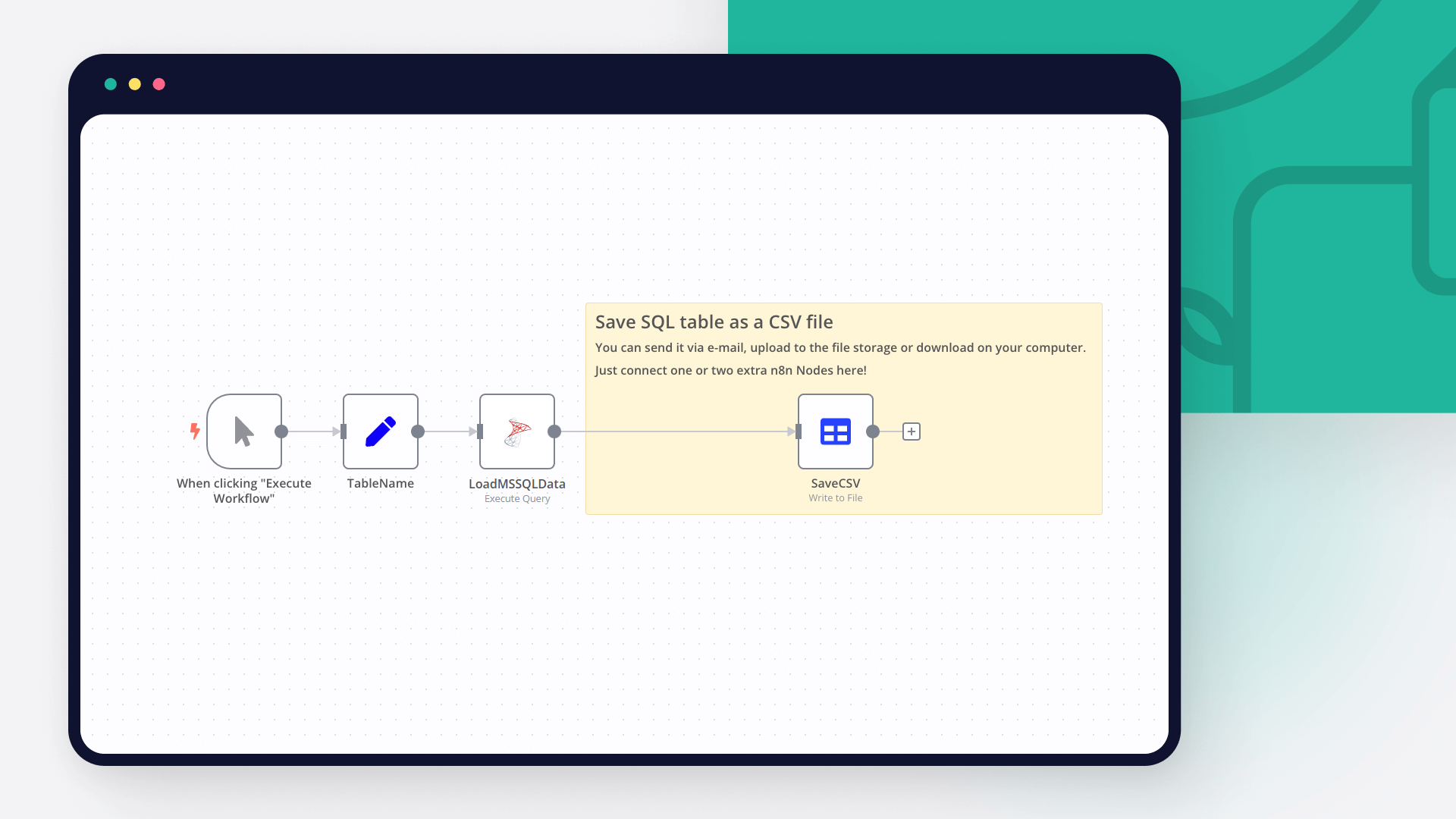
Save yourself the work of writing custom integrations for Microsoft SQL and OpenCTI and use n8n instead. Build adaptable and scalable Development, Data & Storage, workflows that work with your technology stack. All within a building experience you will love.

How to connect Microsoft SQL and OpenCTI

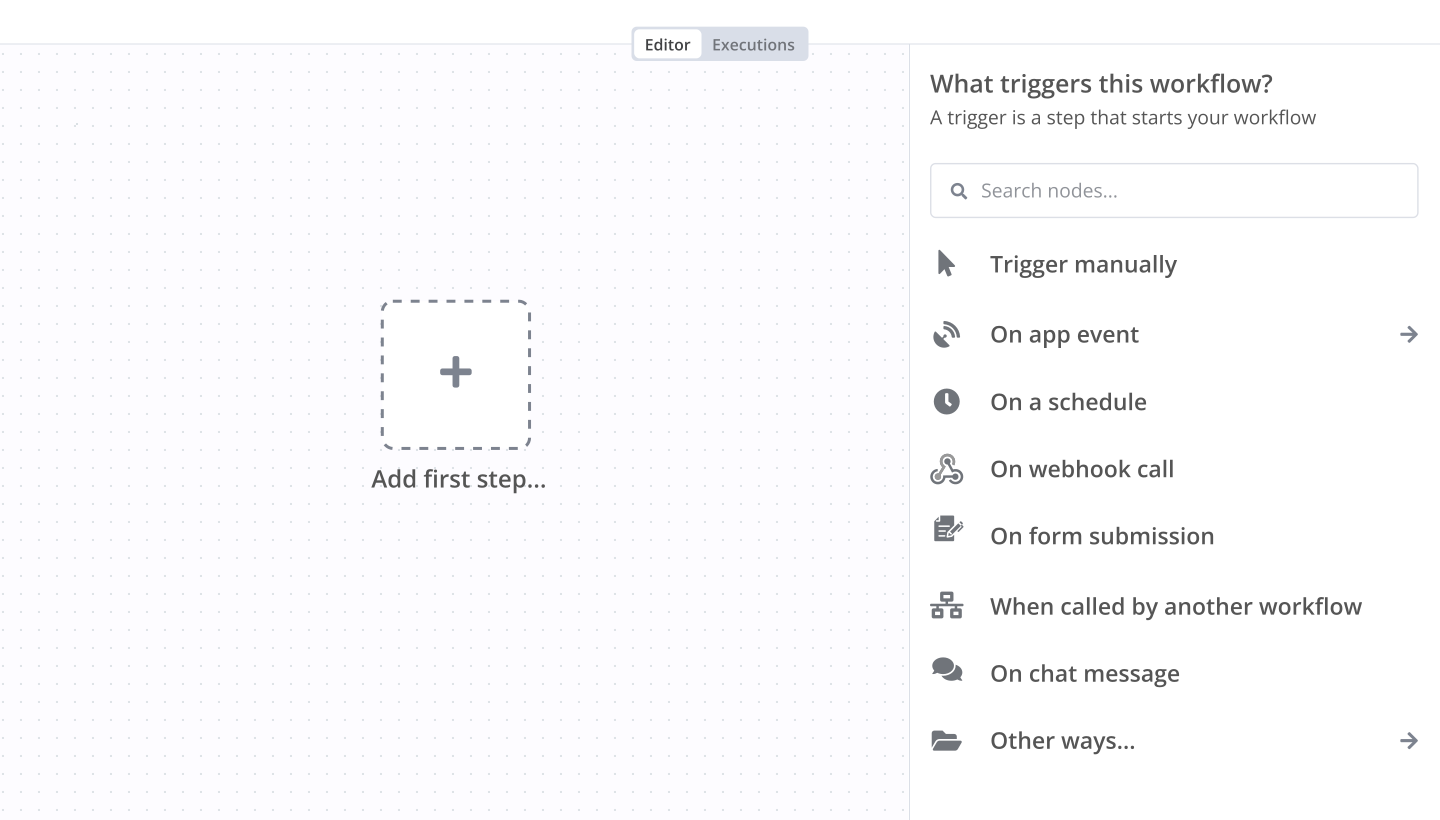
Create a new workflow and add the first step

In n8n, click the "Add workflow" button in the Workflows tab to create a new workflow. Add the starting point – a trigger on when your workflow should run: an app event, a schedule, a webhook call, another workflow, an AI chat, or a manual trigger. Sometimes, the HTTP Request node might already serve as your starting point.

Microsoft SQL and OpenCTI integration: Create a new workflow and add the first step

Automated business KPI insights with GPT-4, MSSQL, analytics & multi-channel alerts

WORKFLOW OVERVIEW This workflow is an AI-powered business intelligence agent designed for founders and business owners. It automatically collects key business metrics, calculates performance KPIs, applies decision logic, uses AI reasoning, and sends clear, actionable notifications — without dashboards or manual reports. Key Features: ✅ Aggregates multiple data sources (MSSQL, Google Analytics, Google Sheets) ✅ Calculates critical KPIs: ROAS, CAC, Revenue & User Growth ✅ Applies rule-based decision logic for business risk and opportunity detection ✅ AI-powered reasoning: summarizes insights and recommends actions ✅ Multi-channel notifications: Email, WhatsApp, Slack, Telegram ✅ Fully automated daily execution via Cron trigger ✅ Enterprise-ready: error handling, structured data, KPI validation Setup & Requirements: API access to data sources (MSSQL, Google Analytics, Google Sheets) OpenAI or Google Gemini API for AI reasoning Messaging integration: Gmail, Twilio (WhatsApp), Slack, Telegram Workflow Flow: Cron Trigger – runs daily at a chosen time Data Collection – revenue, users, marketing spend, website analytics Merge Node – combines all data sources Function Node – consolidates into a single JSON object KPI Calculation – calculates ROAS, CAC, growth rates Business Logic Engine – identifies risks and opportunities AI Reasoning Agent – summarizes insights, suggests actions Notification Formatter – builds founder-friendly message Notification Delivery – sends via WhatsApp, Email, Slack, or Telegram Example Data Formation These data below Getting from all different channels. `{ "revenue": 4290, "registeredUsers": 20, "totalUsers": 3, "adSpend": 800 }` Applies rule-based logic to detect potential risks or opportunities `{ "ROAS": 5.36, "CAC": 40, "agentStatus": "normal", "agentPriority": "low", "insights": ["Marketing campaigns are performing very well"] }` Workflow Highlights Fully automated, runs daily without human intervention Integrates multiple business data sources Converts raw data into KPIs for actionable insight Applies both rule-based logic and AI reasoning Generates concise, human-friendly notifications Sending notification to different channels.

Build your own Microsoft SQL and OpenCTI integration

Create custom Microsoft SQL and OpenCTI workflows by choosing triggers and actions. Nodes come with global operations and settings, as well as app-specific parameters that can be configured. You can also use the HTTP Request node to query data from any app or service with a REST API.

Microsoft SQL supported actions

Execute Query

Execute an SQL query

Insert

Insert rows in database

Update

Update rows in database

Delete

Delete rows in database

Supported methods for OpenCTI

Delete
Get
Head
Options
Patch
Post
Put

To set up OpenCTI integration, add the HTTP Request node to your workflow canvas and authenticate it using a predefined credential type. This allows you to perform custom operations, without additional authentication setup. The HTTP Request node makes custom API calls to OpenCTI to query the data you need using the URLs you provide.

Requires additional credentials set up

Use n8n's HTTP Request node with a predefined or generic credential type to make custom API calls.

Microsoft SQL and OpenCTI integration details

Microsoft SQL

Microsoft SQL

SQL Server is database management system developed by Microsoft. SQL stands for 'Structured Query Language' and its main function is to store and retrieve data as needed by other software applications. It remains one of the most used databases in the world.

OpenCTI

OpenCTI

OpenCTI is an open-source platform designed for cyber threat intelligence management. It facilitates the collection, analysis, and sharing of threat intelligence data, helping organizations proactively defend against cyber threats by providing insights into vulnerabilities, indicators of compromise, and attacker tactics.

Other integrations with Microsoft SQL and OpenCTI

The SOAR platform you want

Mountains of monotonous tasks make building and monitoring your workflows a chore. Not anymore.

Learn more

Save engineering resources

Reduce time spent on customer integrations, engineer faster POCs, keep your customer-specific functionality separate from product all without having to code.

Learn more

FAQ about Microsoft SQL integrations

Need help setting up your Microsoft SQL and OpenCTI integration?

Discover our latest community's recommendations and join the discussions about Microsoft SQL and OpenCTI integration.

  • Cathryn17

    Syntax error when inserting multiple rows using Microsoft SQL node with Azure Dedicated SQL pool

    Cathryn17

    Describe the problem/error/question When inserting multiple rows (items) into an Azure Dedicated SQL pool (on a regular Azure SQL Server), we receive a syntax error from the DB (“Parse error at line: 1, column: 73: Incor…

    Open topic

Looking to integrate Slack and VirusTotal in your company?

Three colleagues talking around laptops at a shared desk

Trusted by teams building smarter workflows.

Why

Why use n8n to integrate Microsoft SQL with OpenCTI

Handle branching, merging and iteration easily. Pause your workflow to wait for external events.

Re-run single steps to test changes in no time. And pin your data to avoid generating trigger events every time you execute.

Your data is displayed alongside your settings, making edge cases easy to track down.

Use 1000+ workflow templates available from our core team and our community.

Copy and paste, easily import and export workflows.
Simple enough to 
understand + sophisticated 
enough to ship

Man in a brown jacket working at his desk by a window