See llms.txt for all machine-readable content.

NASA and Survicate integration

Save yourself the work of writing custom integrations for NASA and Survicate and use n8n instead. Build adaptable and scalable Miscellaneous, workflows that work with your technology stack. All within a building experience you will love.

How to connect NASA and Survicate

Create a new workflow and add the first step

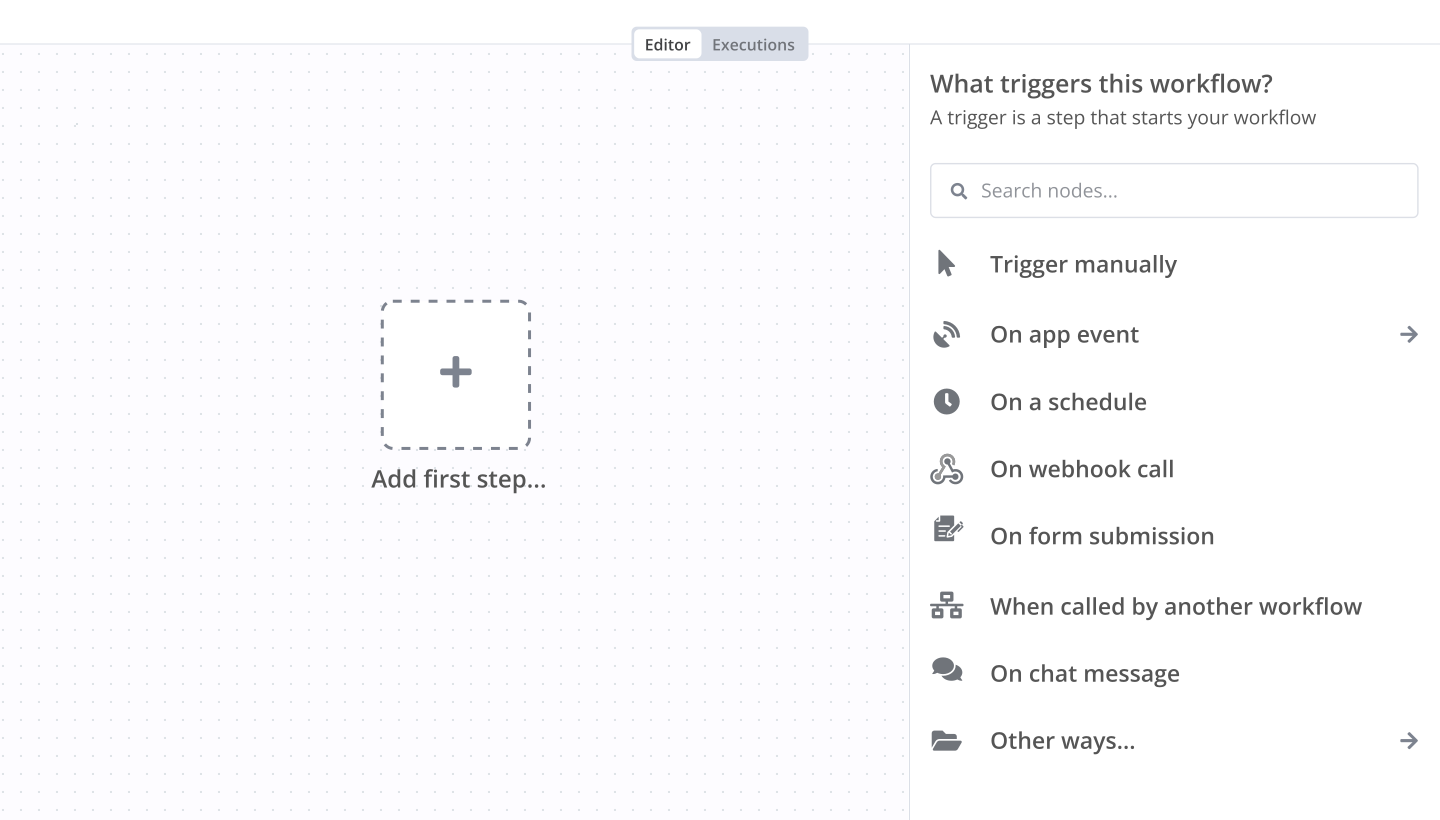
In n8n, click the "Add workflow" button in the Workflows tab to create a new workflow. Add the starting point – a trigger on when your workflow should run: an app event, a schedule, a webhook call, another workflow, an AI chat, or a manual trigger. Sometimes, the HTTP Request node might already serve as your starting point.

NASA and Survicate integration: Create a new workflow and add the first step

Monitor NASA asteroid threats with AI fact-check and multi-channel alerts

Who Is This For? This workflow is designed for space enthusiasts, science educators, journalists, fact-checkers, and researchers who want to stay informed about near-Earth asteroid threats while filtering out media sensationalism. It's also valuable for anyone studying how different regions cover space-related news. What It Does This workflow creates an automated planetary defense monitoring system that: Scans NASA's Near Earth Object database for potentially hazardous asteroids over a 7-day window Searches news coverage across three regions (US, Japan, EU) to compare media reporting Uses AI (GPT-4o-mini) to fact-check news claims against official NASA data Detects misinformation and measures media sensationalism levels Generates visual charts comparing actual threat levels vs media panic Sends alerts through multiple channels (Slack, Discord, Email) Logs all alerts to Google Sheets for historical analysis How It Works Trigger: Runs daily at 9 AM or on-demand via webhook NASA Data Fetch: Retrieves 7-day asteroid forecast from NASA NeoWs API Threat Analysis: Identifies potentially hazardous asteroids and assigns alert levels (LOW/MEDIUM/HIGH) News Search: Searches news in US, Japan, and EU using Apify's Google Search Scraper AI Fact-Check: GPT-4o-mini compares news claims against NASA data, detecting misinformation Visualization: Generates gauge charts for threat level and media panic, plus regional comparison bar chart Multi-Channel Alerts: Sends formatted reports to Slack, Discord, Email, and logs to Google Sheets Set Up Steps Estimated time: 15-20 minutes NASA API (Required): Get your free API key at api.nasa.gov Apify (Required): Create account and connect via OAuth OpenAI (Required): Add your API key from platform.openai.com Notification Channels (Choose at least one): Slack: Create OAuth app and connect Discord: Create webhook URL Email: Configure SMTP settings Google Sheets (Optional): Create a sheet for logging with columns: Date, Alert Level, Hazardous Count, Threat Score, Media Panic Score, Misinformation Detected, Top Asteroid, Most Accurate Region Requirements NASA API key (free) Apify account (free tier available) OpenAI API key (paid) At least one notification channel configured n8n version 1.0+ How to Customize Change scan frequency: Modify the Schedule Trigger node Add more regions: Edit the "Configure Regional Search" code node Adjust alert thresholds: Modify lunar distance threshold (currently 10) in "Analyze Asteroid Threats" Disable channels: Simply remove connections to notification nodes you don't need Customize messages: Edit the "Format Multi-Channel Messages" node

Popular ways to use the NASA and Survicate integration

Build your own NASA and Survicate integration

Create custom NASA and Survicate workflows by choosing triggers and actions. Nodes come with global operations and settings, as well as app-specific parameters that can be configured. You can also use the HTTP Request node to query data from any app or service with a REST API.

NASA supported actions

Supported API Endpoints for Survicate

To set up Survicate integration, add the HTTP Request node to your workflow canvas and authenticate it using a generic authentication method. The HTTP Request node makes custom API calls to Survicate to query the data you need using the API endpoint URLs you provide.

See the example here

These API endpoints were generated using n8n

n8n AI workflow transforms web scraping into an intelligent, AI-powered knowledge extraction system that uses vector embeddings to semantically analyze, chunk, store, and retrieve the most relevant API documentation from web pages. Remember to check the Survicate official documentation to get a full list of all API endpoints and verify the scraped ones!

NASA and Survicate integration details

NASA

NASA

NASA is an agency of the U.S. federal government. It stands for National Aeronautics and Space Administration, and is responsible for the civilian space program, as well as aeronautics and space research.

Survicate

Survicate

Survicate is a customer feedback platform that helps businesses gather and analyze feedback through various channels, including surveys, feedback widgets, and website analytics. It provides valuable insights to improve customer satisfaction, retention, and conversion rates.

Other integrations with NASA and Survicate

FAQ about NASA integrations

Looking to integrate Slack and VirusTotal in your company?

Three colleagues talking around laptops at a shared desk

Trusted by teams building smarter workflows.

Why

Why use n8n to integrate NASA with Survicate

Handle branching, merging and iteration easily. Pause your workflow to wait for external events.

Re-run single steps to test changes in no time. And pin your data to avoid generating trigger events every time you execute.

Your data is displayed alongside your settings, making edge cases easy to track down.

Use 1000+ workflow templates available from our core team and our community.

Copy and paste, easily import and export workflows.
Simple enough to 
understand + sophisticated 
enough to ship

Man in a brown jacket working at his desk by a window