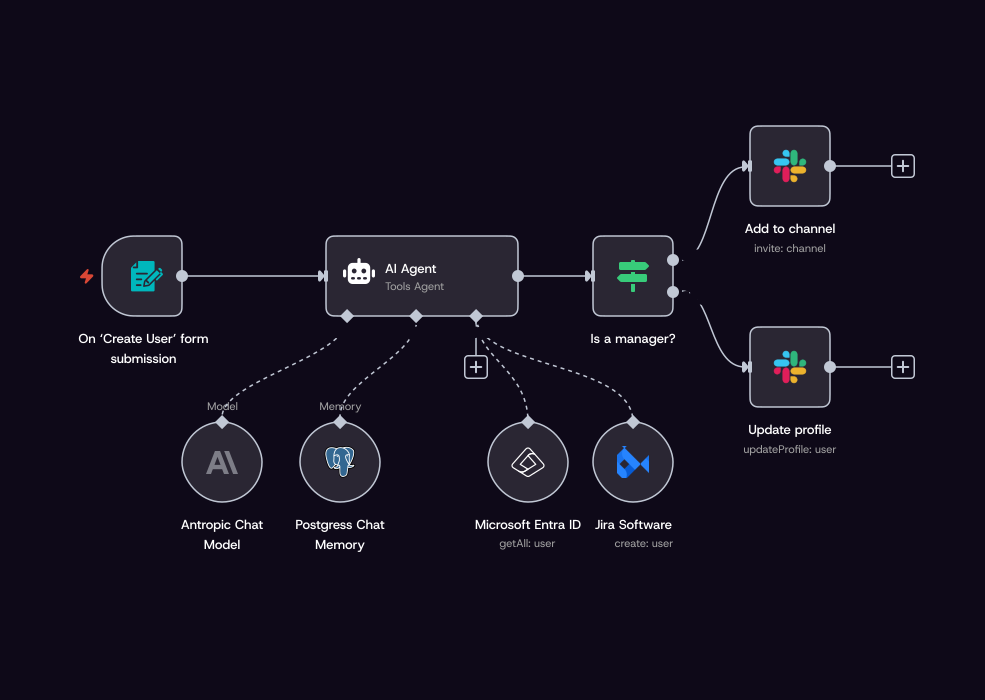
See llms.txt for all machine-readable content.
Back to integrations
ChargeOver and Cloudinary integration
Save yourself the work of writing custom integrations for ChargeOver and Cloudinary and use n8n instead. Build adaptable and scalable Finance & Accounting, workflows that work with your technology stack. All within a building experience you will love.





How to connect ChargeOver and Cloudinary
Create a new workflow and add the first step
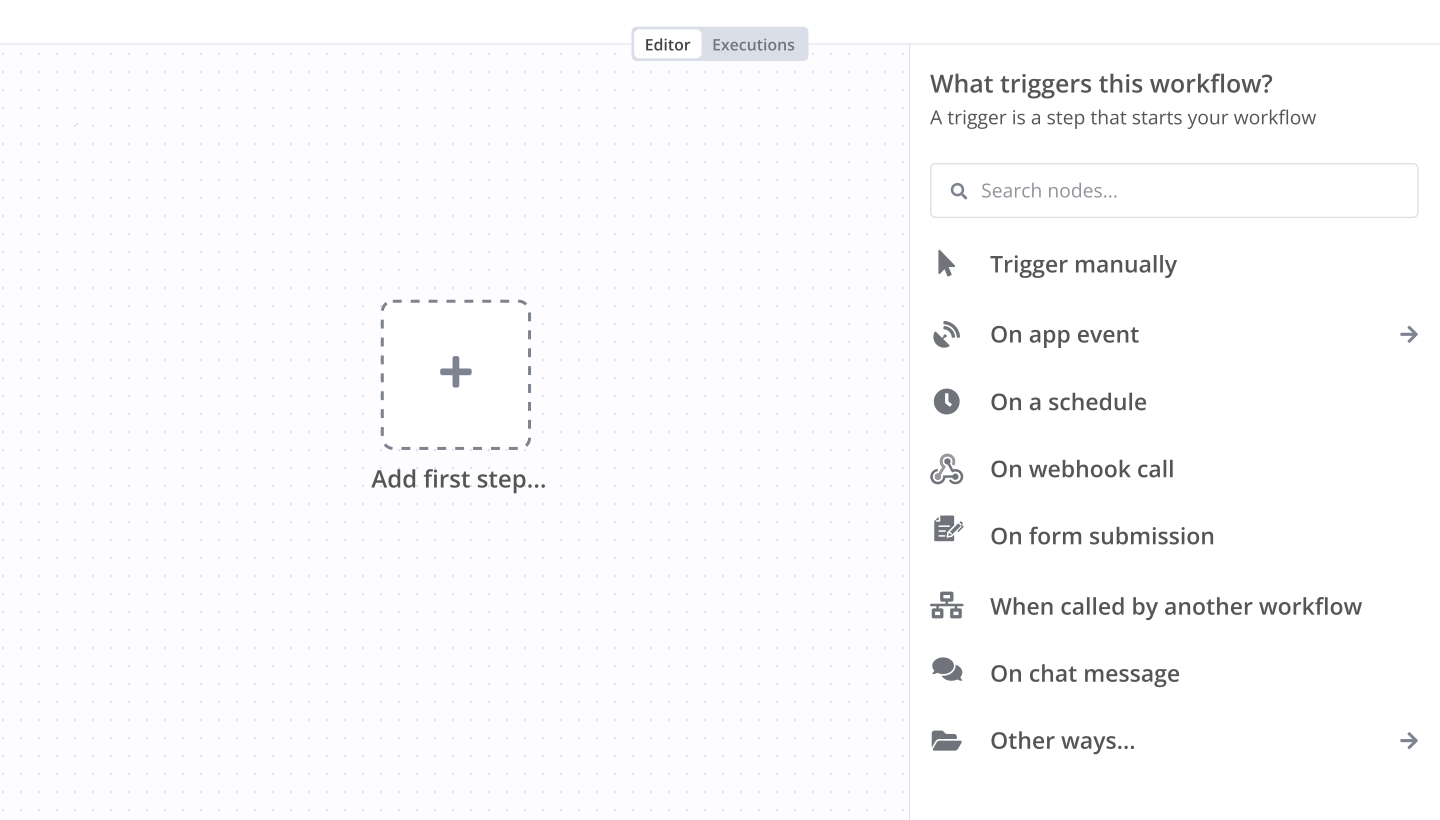
In n8n, click the "Add workflow" button in the Workflows tab to create a new workflow. Add the starting point – a trigger on when your workflow should run: an app event, a schedule, a webhook call, another workflow, an AI chat, or a manual trigger. Sometimes, the HTTP Request node might already serve as your starting point.
Build your own ChargeOver and Cloudinary integration
Create custom ChargeOver and Cloudinary workflows by choosing triggers and actions. Nodes come with global operations and settings, as well as app-specific parameters that can be configured. You can also use the HTTP Request node to query data from any app or service with a REST API.
Supported API Endpoints for ChargeOver
GET
Get quote
Get the details of a specific quote.
/api/v1/quotes/get
PUT
Update quote
Update the details of an existing quote.
/api/v1/quotes/update
GET
List quotes
Get a list of all quotes available.
/api/v1/quotes/list
POST
Create customer
Create a new customer.
/api/customers/create
PUT
Update customer
Update an existing customer.
/api/customers/update
GET
List customers
Get a list of all customers.
/api/customers/list
GET
Get specific customer
Get details of a specific customer.
/api/customers/get
DELETE
Delete customer
Remove a customer from the system.
/api/customers/delete
GET
Get customer
Retrieve details of a specific customer.
/api/v3/customer/2
POST
Create customer
Create a new customer record.
/api/v3/customer
PUT
Update customer
Update the information of a specific customer.
/api/v3/customer/3
GET
List customers
Retrieve a list of all customers.
/api/v3/customers
POST
Add contact
Add a new contact user.
/api/users/create
PUT
Update contact
Update an existing user contact.
/api/users/update
GET
List contacts
Get a list of all contact users.
/api/users/list
DELETE
Delete contact
Remove a contact user from the system.
/api/users/delete
POST
Create invoice
Create a new invoice.
/api/invoices/create
PUT
Update invoice
Update an existing invoice.
/api/invoices/update
GET
List invoices
Get a list of all invoices.
/api/invoices/list
GET
List transactions
Get a list of all transactions.
/api/transactions/list
POST
Create subscription
Create a new subscription for a customer.
/api/v1/subscriptions/create
GET
List subscriptions
Get a list of all subscriptions available.
/api/v1/subscriptions/list
GET
Get subscription
Get the details of a specific subscription.
/api/v1/subscriptions/get
POST
Create item
Create a new item for sale.
/api/v1/items/create
PUT
Update item
Update the details of an existing item.
/api/v1/items/update
DELETE
Delete item
Delete an existing item.
/api/v1/items/delete
POST
Store credit card
Store a new credit card for a customer.
/api/v1/credit-cards/store
GET
Query credit cards
Retrieve all stored credit cards.
/api/v1/credit-cards/query
DELETE
Delete credit card
Delete a stored credit card.
/api/v1/credit-cards/delete
POST
Store ACH account
Store a new ACH account for a customer.
/api/v1/ach-echeck/store
GET
Query ACH accounts
Retrieve all stored ACH accounts.
/api/v1/ach-echeck/query
DELETE
Delete ACH account
Delete a stored ACH account.
/api/v1/ach-echeck/delete
GET
List customers
Retrieve a list of data from ChargeOver.
/api/v3/customer
GET
Get specific customer
Retrieve a specific record from ChargeOver using the record id.
/api/v3/customer/1
GET
Count customers
Get the total number of customers.
/api/v3/customer/_count
GET
Count customers
Get the number of customers with a specific company name.
/api/v3/customer/_count?where=company:CONTAINS:test
GET
List revisions
Get the most recent 10 revisions of a customer.
/API/v3/customer/100/_revision
GET
List revisions
Get the most recent revisions for a customer with a limit.
/API/v3/customer/100/_revision?limit=5
GET
Get customer by external key
Retrieve a customer using an external key.
/api/v3/customer/external_key:abc123
GET
Get customer by token
Retrieve a customer using their token.
/api/v3/customer/token:0q7fx5652k18
GET
List invoices
Get a list of invoices on a specific date.
/api/v3/invoice?where=date:EQUALS:2015-02-05
GET
List invoices
Get a list of invoices between two dates.
/v3/invoice?where=date:GTE:2015-02-01,date:LTE:2015-02-05
GET
List invoices
Get a sorted list of invoices by total.
/api/v3/invoice?order=total:ASC
POST
Create invoice for customer by external key
Add an invoice for a customer using their external key.
/api/v3/invoice
GET
List users
Get a list of users with limit and offset.
/api/v3/user?offset=8&limit=2
GET
Get item by external key
Retrieve an item using an external key with escape syntax.
/api/v3/item?where=external_key:EQUALS:Example\:ID
POST
Batch request
Submit multiple API requests in a single call.
/api/v3/_bulk
To set up ChargeOver integration, add the HTTP Request node to your workflow canvas and authenticate it using a generic authentication method. The HTTP Request node makes custom API calls to ChargeOver to query the data you need using the API endpoint URLs you provide.
See the example hereThese API endpoints were generated using n8n
n8n AI workflow transforms web scraping into an intelligent, AI-powered knowledge extraction system that uses vector embeddings to semantically analyze, chunk, store, and retrieve the most relevant API documentation from web pages. Remember to check the ChargeOver official documentation to get a full list of all API endpoints and verify the scraped ones!
What can you do with Cloudinary?
Upload File
Upload an asset from file data
Upload From URL
Upload an asset from URL
Compose: Combine Transformations
Build a delivery URL that chains several transformation steps in order. Outputs secure_url and a reusable transformation string.
Compose: Custom Transformation String
Build a delivery URL from a raw Cloudinary transformation string. Outputs secure_url and a reusable transformation string.
Image: Convert Format
Build a delivery URL that converts an image to another format. Outputs secure_url and a reusable transformation string.
Image: Crop
Build a delivery URL that crops an image to fixed dimensions or an aspect ratio. Outputs secure_url and a reusable transformation string.
Image: Optimize
Build a delivery URL that auto-optimizes an image (format + quality). Outputs secure_url and a reusable transformation string.
Image: Resize
Build a delivery URL that resizes an image to a width and/or height. Outputs secure_url and a reusable transformation string.
Video: Crop
Build a delivery URL that crops a video to fixed dimensions or an aspect ratio. Outputs secure_url and a reusable transformation string.
Video: Optimize
Build a delivery URL that auto-optimizes a video (format/codec + quality). Outputs secure_url and a reusable transformation string.
Video: Resize
Build a delivery URL that resizes a video to a width and/or height. Outputs secure_url and a reusable transformation string.
Video: Thumbnail
Build a delivery URL for a still image frame from a video. Outputs secure_url and a reusable transformation string.
Video: Trim
Build a delivery URL that trims a video to a start, end, and/or duration. Outputs secure_url and a reusable transformation string.
Delete Assets
Delete one or more assets by public ID
Get Asset
Get details for a single asset by asset ID
Search Assets
Search for assets using a Cloudinary search expression
Update Asset Structured Metadata
Update structured metadata for an asset by asset ID
Update Asset Tags
Update tags for an asset by asset ID
Video Player
Generate embed code and config for the Cloudinary Video Player. Outputs embed_url and a player_config JSON string.
Get Metadata Fields
Get all metadata fields definitions
Get Tags
Get all tags for a specific resource type
Update Asset Structured Metadata
Deprecated — use the Asset resource instead. Update structured metadata for an existing asset by public ID.
Update Asset Tags
Deprecated — use the Asset resource instead. Update tags for an existing asset by public ID.
ChargeOver and Cloudinary integration details
FAQs
FAQ
AI agents and workflows for technical teams at


Why use n8n to integrate ChargeOver with Cloudinary
Build complex workflows, really fast