Context
iMi digital is part of a larger group of companies founded in 2000. Within the group, a small development team supports marketing and digital initiatives across multiple businesses, including ecommerce projects built on Shopware and Magento, plus custom development with Laravel and many system integrations.
Alexander Menk, Developer Team Lead, oversees the PHP development team. As the team built more interfaces between systems, they increasingly looked for a way to connect tools without continually maintaining custom middleware and plugins.
Challenge
The team needed a reliable way to run a full featured ERP import into a Shopware store they developed and maintained. The import had to handle multiple entity types, including products, customers, categories, and extremely large pricing updates.
Performance and maintainability were central concerns. The workflow needed to move and transform large datasets, avoid memory issues, and remain easy to evolve as Shopware versions changed. A previous importer built by an external ERP focused party could take about a day to run, which created operational friction and limited how quickly the store could reflect new data.
Separately, the team also had internal marketing operations that were still manual, such as moving seminar signups from a database into a CRM and into Mautic segments.
Solution
After experimenting with n8n on smaller automations, iMi digital GmbH used n8n and the Shopware API to build a scalable import system. The workflow starts with a file watcher that monitors a hot folder fed by CSV files from SFTP. Based on file prefixes, the workflow routes to the correct import path, such as products, customers, or prices, and then moves processed files to keep operations clean.
Inside the import, they implemented practical tactics to keep development and debugging fast. They could run to a specific node, pin data, and iterate when API responses were unclear. For the Shopware side, they ultimately relied on direct REST calls and the Shopware Sync API, batching payloads to reduce single request overhead and accelerate throughput.
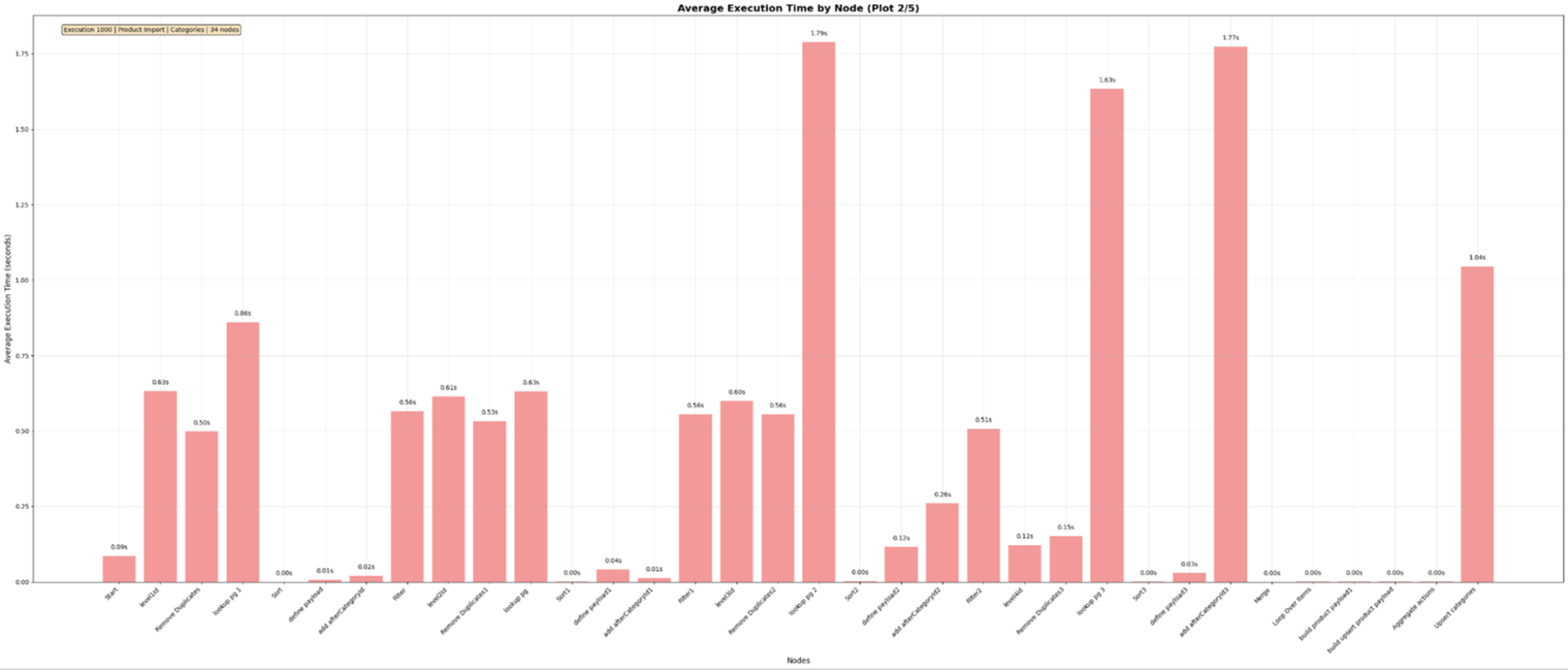
To handle performance constraints like memory leaks during very large price imports, they broke logic into sub workflows and used call patterns that limited how much data had to stay in memory at once. Alexander also built a lightweight performance analysis tool that connects to the n8n API to understand where execution time was being spent, beyond what the standard interface showed.
Results
The new approach delivered a steep change in speed. A product import that previously took about a day now runs in around 10 minutes. The workflow also supports ongoing scale, including processing about 2.6 million price rows per week alongside customer and product imports in a unified system.
For internal operations, n8n also reduced manual marketing work. By automating the transfer of seminar signups into downstream systems, the marketing team no longer had to handle each participant manually, saving several minutes per participant and an estimated few hours per month at typical volumes.
Just as importantly, iMi digital GmbH gained a repeatable way to build and maintain integrations. With n8n, the team can develop and debug integrations iteratively, which reduces long term update costs compared to maintaining custom code tied to specific platform versions.
"The product importer used to like a day or so to run. With n8n, it takes less than 10 minutes."

Alexander Menk
Developer Team Lead, iMi digital GmbH