Back to integrations
Integrate Algolia with 1000+ apps and services
Unlock the full potential of Algolia and n8n’s automation platform by connecting Algolia’s capabilities with over 1,000 apps, data sources, services, and n8n’s built-in AI features.
Need something that’s not covered yet?
Use n8n’s pre-authenticated HTTP Request node to create new connections, giving you the flexibility to build powerful automations on any stack.


Created by
Algolia
Last update
a day ago
Algolia integration
is built and maintained by our partners at Algolia and verified by n8n. That means it’s solid, safe, and ready to help you tap into some great capabilities.
About Algolia
Official Algolia node for n8n. Automate search and discovery workflows: index, update, retrieve, and search records; manage indices, synonyms, rules, dictionaries, API keys, and settings. Sync data from any source to Algolia to power fast, relevant AI search and recommendations—no code required.
Related categories

What can you do with Algolia?
Retrieve log entries
The request must be authenticated by an API key with the [`logs` ACL](https://www.algolia.com/doc/guides/security/api-keys/#access-control-list-acl).
Check application task status
Checks the status of a given application task.
List API keys
Lists all API keys associated with your Algolia application, including their permissions and restrictions.
Create an API key
Creates a new API key with specific permissions and restrictions.
Retrieve API key permissions
Gets the permissions and restrictions of an API key.
Update an API key
Replaces the permissions of an existing API key.
Delete an API key
Deletes the API key.
Restore an API key
Restores a deleted API key.
Assign or move a user ID
Assigns or moves a user ID to a cluster.
List user IDs
Lists the userIDs assigned to a multi-cluster application.
Assign multiple userIDs
Assigns multiple user IDs to a cluster.
Get top user IDs
Get the IDs of the 10 users with the highest number of records per cluster.
Retrieve user ID
Returns the user ID data stored in the mapping.
Delete user ID
Deletes a user ID and its associated data from the clusters.
List clusters
Lists the available clusters in a multi-cluster setup.
Search for user IDs
Since it can take a few seconds to get the data from the different clusters,
Get migration and user mapping status
To determine when the time-consuming process of creating a large batch of users or migrating users from one cluster to another is complete, this operation retrieves the status of the process.
Add or delete dictionary entries
Adds or deletes multiple entries from your plurals, segmentation, or stop word dictionaries.
Search dictionary entries
Searches for standard and custom dictionary entries.
Retrieve dictionary settings
Retrieves the languages for which standard dictionary entries are turned off.
Update dictionary settings
Turns standard stop word dictionary entries on or off for a given language.
List available languages
Lists supported languages with their supported dictionary types and number of custom entries.
Delete an index
Deletes an index and all its settings.
Retrieve index settings
Retrieves an object with non-null index settings.
Update index settings
Update the specified index settings.
Check task status
Checks the status of a given task.
Copy or move an index
Copies or moves (renames) an index within the same Algolia application.
List indices
Lists all indices in the current Algolia application.
Add a new record (with auto-generated object ID)
Adds a record to an index or replaces it.
Retrieve a record
Retrieves one record by its object ID.
Add or replace a record
If a record with the specified object ID exists, the existing record is replaced.
Delete a record
Deletes a record by its object ID.
Delete records matching a filter
This operation doesn't accept empty filters.
Delete all records from an index
Deletes only the records from an index while keeping settings, synonyms, and rules.
Add or update attributes
Adds new attributes to a record, or updates existing ones.
Batch indexing operations on one index
Adds, updates, or deletes records in one index with a single API request.
Batch indexing operations on multiple indices
Adds, updates, or deletes records in multiple indices with a single API request.
Retrieve records
Retrieves one or more records, potentially from different indices.
Retrieve a rule
Retrieves a rule by its ID.
Create or replace a rule
If a rule with the specified object ID doesn't exist, it's created.
Delete a rule
Deletes a rule by its ID.
Create or update rules
Create or update multiple rules.
Delete all rules
Deletes all rules from the index.
Search for rules
Searches for rules in your index.
Search an index
Searches a single index and returns matching search results as hits.
Search multiple indices
Sends multiple search requests to one or more indices.
Search for facet values
Searches for values of a specified facet attribute.
Browse for records
Retrieves records from an index, up to 1,000 per request.
Retrieve a synonym
Retrieves a synonym by its ID.
Create or replace a synonym
If a synonym with the specified object ID doesn't exist, Algolia adds a new one.
Delete a synonym
Deletes a synonym by its ID.
Create or replace synonyms
If a synonym with the `objectID` doesn't exist, Algolia adds a new one.
Delete all synonyms
Deletes all synonyms from the index.
Search for synonyms
Searches for synonyms in your index.
List allowed sources
Retrieves all allowed IP addresses with access to your application.
Replace allowed sources
Replaces the list of allowed sources.
Add a source
Adds a source to the list of allowed sources.
Delete a source
Deletes a source from the list of allowed sources.
How to install Algolia and use it in your n8n workflows
Verified nodes need a quick setup by an instance owner first, but after that, everyone on the instance can start using them in their workflows. Learn more here.
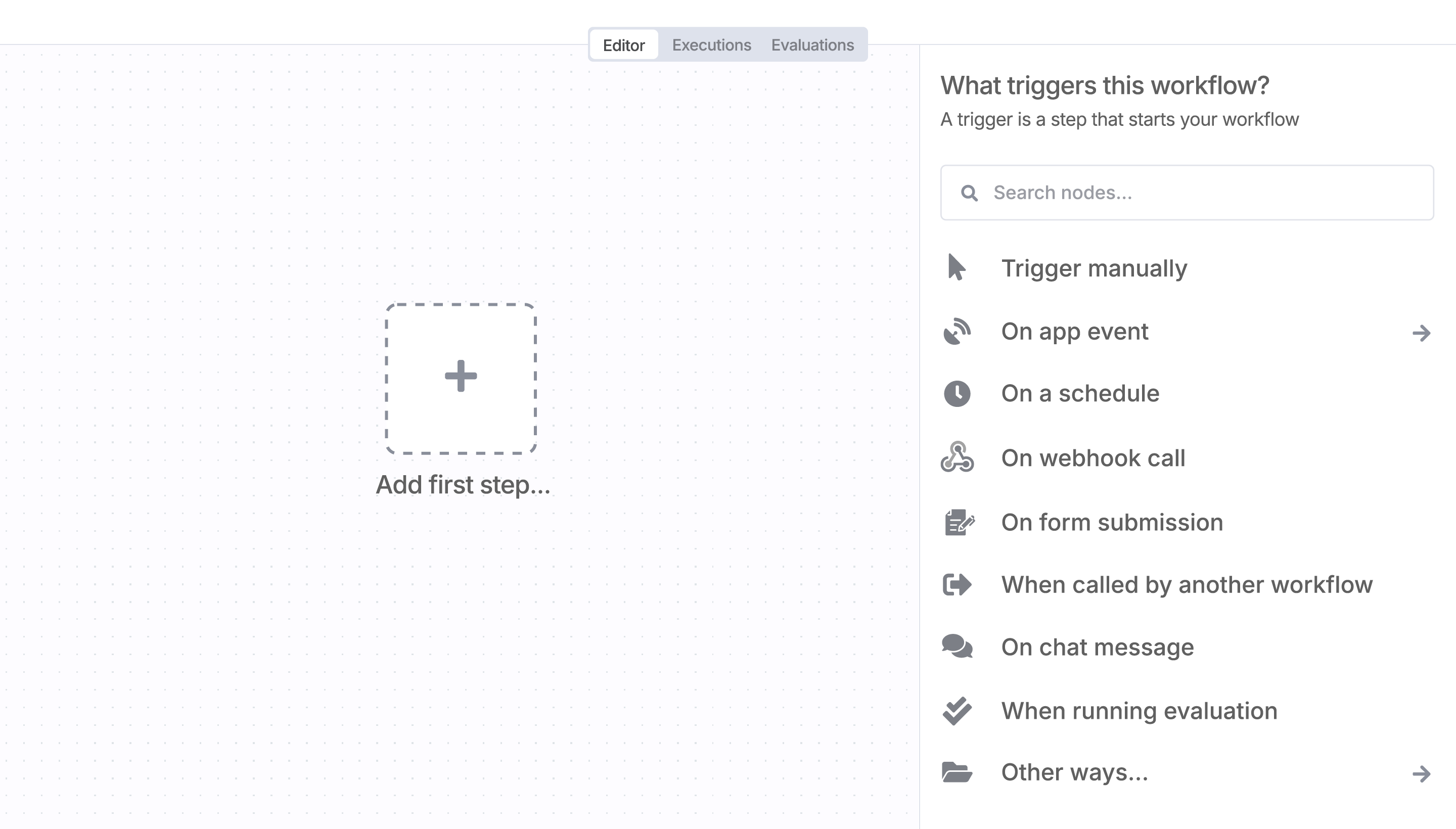
Sign in to n8n, open the editor, and click + in the top right to open the Nodes panel
Resources for Algolia
The world's most popular workflow automation platform for technical teams including